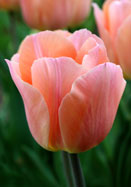
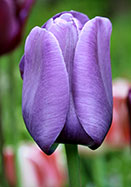
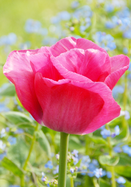
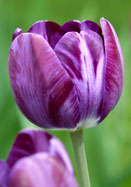
Bulb sales for fall 2021 are SUSPENDED.
Sign up for an alert for our end of season sale.
Fall 2025 shipping is over. Thank you for a great season!
Order these fall-planted bulbs NOW for delivery in October.
|
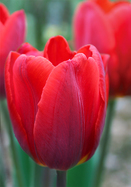
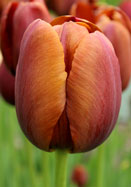
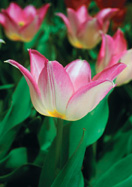
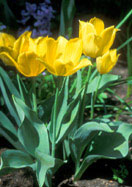
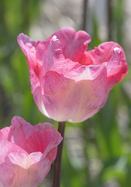
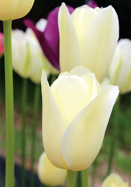
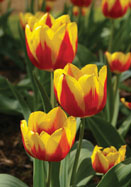
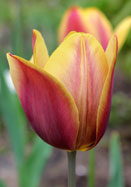
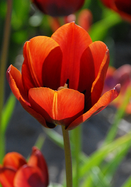
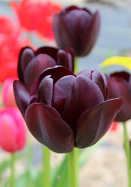
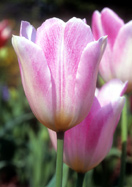
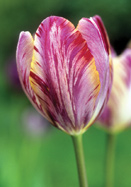
WHY GROW TULIPS? Nothing says “Spring” better than these diverse, colorful, elegantly simple flowers. They are truly icons of the season.
TULIP HISTORY – Tulips came to Europe from Turkey in the mid-1500s and zoomed to superstar status during the Dutch “Tulipomania” of the 1630s. Learn more.
GETTING TULIPS TO LIVE FOREVER – Most important is keeping them dry in summer; learn more. And if animals bother yours, check out our tips for protecting them.
|
Even Rarer Tulips — Every year we get a handful of spectacular bulbs that are so rare we don’t offer them until August. For an alert the moment they go on sale, subscribe to our free, monthly email newsletter or sign up for individual email alerts for each variety below.
|
|
|
|
|
Explore some of the glorious diversity of tulips – they can be double, ruffled, bicolored, lily-like, and more! We’ll choose a collection that includes a range of bloom times to extend your season, a variety of colors and forms to delight your eye, and perhaps fragrance as well! 12 bulbs, 3 each of 4 stunning varieties. For zones 5a-7b(8bWC).
For 6, 9, or more of each, order additional samplers. Tulip care.
|
|
|
|
Add some fireworks to your garden and bouquets with this spectacularly different tulip that Anna Pavord calls “spidery and mad.” Unknown in the wild, it’s probably the last survivor from the early 1700s when stiletto-petalled tulips like it were all the rage in the Ottoman Empire. 20”, zones 3b-7a(8aWC), from Holland. Chart and care.
|
|
|
|
“Ad Rem” means “to the point”, and there’s certainly nothing vague or irrelevant about this beauty! Glowing cups of scarlet-orange petals edged with yellow are held high on sturdy stems, and combined with its fragrance, it’s not to be missed. Darwin, 20-24”, zones 3a-7b(8bWC), from Holland. Chart and care.
|
|
|
|
“Delectable anywhere,” writes garden-guru Ann Lovejoy, “it should be planted by the bagful.” Lightly fragrant and winner of multiple awards including the prestigious RHS Award of Garden Merit, this popular tulip has been celebrated for its dreamy and unusual color for over 60 years. And it’s great for forcing, too. Single Early, 14-16”, zones 3a-7b(8bWC), from Holland. Chart and care.
|
|
|
|
This French variety is a flower-arranger’s dream with big bright red flowers with brushes of raspberry/fuchsia and striking apricot edges. ‘Avignon’ is a wonderful cut flower, but its strong tall stems also make it a stand-out in the garden, resisting spring rains and winds. Single Late, 24-26”, zones 3a-7b(8bWC), from Holland. Chart and care.
|
|
|
|
The best parrot tulip of the 20th century and dramatic enough to be showcased on the covers of both Martha Stewart Living and Horticulture, ‘Black Parrot’ is a dark, glossy maroon, exuberantly ruffled and frilled. Combine it with snake’s-head fritillaries for a dusky springtime bouquet á la Martha, or pair it with ‘Kingsblood’ for a dazzling display! 19-21”, zones 3a-7b(8bWC), from Holland. Chart and care.
|
|
|
|
It’s not really blue, of course, but a soft, silvery lilac that combines amiably with just about everything. Even better, its tall, late, graceful blossoms last and last in bloom, longer than any other tulip we’ve ever grown. Darwin/Single Late, 24”, zones 3a-7b(8bWC), from one last farm in Holland. Chart and care.
|
|
|
|
Looking for a classic pink tulip? Sweet ‘Carola’ couldn’t be better! Cup-shaped rose-pink blossoms harmonize beautifully with pastel tones but are deep enough to hold their own combined with stronger colors making this a great choice for new (and experienced!) gardeners. Triumph, 16-20”, zones 3a-7b(8bWC), from Holland. Chart and care.
|
|
|
|
Once the world’s most popular tulip, gracing hundreds of catalog covers, this willowy, shell-pink beauty was lost to gardeners in 2007 when the last US grower finally gave it up. To save it, we sent 100 bulbs from his last harvest to our friends in Holland, and now there’s enough to share! Though bred from antique Flemish stock, ‘Clara’ was the prototypical 20th-century tulip – not feathered or flamed, not short and bright, but tall, late, pastel, and lovely. Learn more. Darwin/Single Late, 22”, zones 3a-7b(8bWC). Chart and care.
|
|
|
|
Named for Harlequin’s sweetheart, this dreamy Bijbloemen broken tulip has flickering purple flames on petals that, instead of pure white, are blushed with lavender. Although tulip-show judges consider that a flaw, everyone else just seem to say, “It’s beautiful!” 18-20”, zones 4a-7b(8bWC), from the Hortus Bulborum. Chart and care.
|
|
|
|
Now all but extinct, this sturdy little rose and white tulip was a popular American sweetheart for many, many years. New York City’s J.M. Thorburn offered it as early as 1872, and it continued to be widely catalogued well into the 1930s, a reflection of its charm and excellence. Thanks to the Hortus Bulborum for saving it! Single Early, 10”, zones 4b-7b(8bWC), from the Hortus. Chart and care.
|
|
|
|
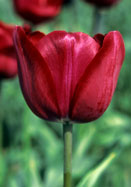
The best red tulip ever? Could be! It’s definitely the only tulip this old that’s still widely grown today. Generations have prized its rich color – red with a plum blush – and its fine habit – sturdy, weather-proof, and enduring. Isn’t it time you tried it? Triumph, 12”, zones 3a-7b(8bWC), from Holland. Chart, care, and learn more.
|
|
|
|
Fragrant, luscious, and late, ‘Dillenburg’ blooms with the earliest bearded iris, offering one last spring treat to look forward to each year. It’s a sophisticated “art shades” blend of peach brushed with rose and one of the last survivors of a whole class of tulips, the Dutch Breeders, that filled pages of catalogs in the early 1900s. As always our supply is very limited, but at least we have it – and every year we worry that we won’t. Single Late, 26”, zones 3a-7b(8bWC), from the Hortus Bulborum. Chart and care.
|
|
|
|
This “coffee-brown, maroon-shaded” gem is “undoubtedly the most attractive of the brown tulips,” said the John Lewis Childs catalog in 1920 when tulips in so-called art shades such as bronze, terra-cotta, and mauve were the height of fashion. It’s certainly one of our favorites! Dutch Breeder/Single Late, 18-22”, zones 4a-7b(8bWC), from the Hortus Bulborum. See our other brown tulips. Chart and care.
|
|
|
|
This classic deep rose tulip shows hints of purple in its luminous petals and is not be be missed! Tulip maven Anna Pavord calls ‘Don Quichotte’ “unusually long-lasting [and] beautifully formed.” and it is reported to return year after year where happy. Triumph, 20-22”, zones 3a-7b(8bWC), from Holland. Chart and care.
|
|
|
|
This rare ‘Duke’ is “deliciously fragrant” (W.N. Craig, 1905), and its bold color pattern — evoking Renaissance pageantry and the shields of heraldry — is one of the most enduringly popular in all of tulip history. In fact, if we assembled gardeners from, say, 1650, 1750, and 1850 and asked them to choose whichever of our tulips they liked best, we’re sure ‘Duc de Berlin’ would rank in their Top Ten. Single Early, 8-10”, zones 4a-7b(8bWC), from the Hortus. Chart and care.
|
|
|
|
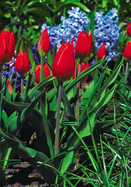
If we had to choose a dozen landmark varieties to summarize the whole amazing history of tulips, this 400-year-old miniature would be one of them. Just 6 inches tall and extra early blooming, ‘Red and Yellow’ is the grandaddy of the ‘Duc van Tols’, a fabled clan of pixie tulips once grown in every garden and forced in pots for Christmas bloom. In front of purple hyacinths, its tiny flames are stunning. 6”, zones 4b-7b(8bWC), from the Hortus Bulborum. Chart and care.
|
|
|
|
Short, sweet, and extra-early, the ‘Duc van Tols’ grew in every stylish garden from about 1600 to 1900. But then tall, late tulips came into vogue, and the ‘Ducs’ all but vanished. Perfect little miniatures, they’re the earliest traditional garden tulips to bloom each spring. Elizabethan ‘Rose’ is our favorite, an innocent white that’s blushed with a little more pink every day it’s open. 5-7”, zones 4b-7b(8bWC), from the Hortus Bulborum. Chart and care.
|
|
|
|
Dusky purplish-rose edged with ivory, ‘Violet’ is one of the most unusual of the ‘Ducs’, a group of short, extra-early tulips that grew in every stylish garden from about 1600-1900. Perfect little miniatures at 5-7 inches tall, the ‘Ducs’ are the earliest traditional garden tulips to bloom each spring. Zones 4b-7b(8bWC), from the Hortus. Chart and care.
|
|
|
|
This bright, sunny little tulip is deep yellow, and to our eye it’s the most elegantly shaped of all the Ducs. Try it combined with deep purple johnny-jump-ups — spring perfection! 5-7”, zones 4b-7b(8bWC), from the Hortus Bulborum. Chart and care.
|
|
|
|
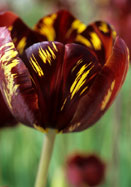
This exceptionally rare tulip is “bronze crimson bordered with orange,” according to the 1889 Rawson catalog. But most gardeners over the past 196 years would have seen it as simply red trimmed with yellow – one of the most popular color combinations in tulips since the very first were brought into Western gardens in the 1500s – and, as the 1865 Vick’s catalog described it, “splendid.” Single Early, 10-12”, zones 4a-7b(8bWC), from the Hortus Bulborum. Chart and care.
|
|
|
|
With its almost savage beauty, this bright, dagger-petaled tulip was listed as a wild species in 19th-century catalogs. It’s never been found in the wild, though, and may be a survivor from the early 1700s when tulips much like it (and T. acuminata) ruled in the lavish gardens of the Ottoman Empire. Whatever its origins, it’s spectacular! Lily-flowered, 16”, zones 4b-7b(8bWC), from the Hortus Bulborum. Chart and care.
|
|
|
|
“Like raspberry-ripple ice cream,” says Anna Pavord in The Tulip, and “one of the best.” It’s also one of the most dramatic of modern parrots, with a whirling-dervish intensity that rivals that of much older parrots such as ‘Amiral de Constantinople’. OHG founder Scott first grew ‘Estella’ 40 years ago, and he says “the outrageous beauty of its first blooms still blazes in his memory.” Aka ‘Gay Presto’, parrot, 18-20”, zones 3a-7b(8bWC), from Holland. Chart and care.
|
|
|
|
This violet-scented wildflower has small, yellow, almond-shaped flowers that nod in bud and then open wide in the sun. Gerard pictured it in his great Herbal of 1597, Jefferson grew it at Monticello, and it’s naturalized almost like a weed throughout Pennsylvania Dutch country – and our garden. Aka T. florentina, 8-14”, zones 5a-8a(8bWC), from Holland. See our other unusually fragrant tulips. Chart, care, and learn more.
|
|
|
|
This rare sport of solid-pink ‘Gander’ is a lovely bicolor that boasts creamy light pink petals highlighted with darker pink at their edges. It’s a beauty sure to harmonize well with the rest of your spring border and unusual enough to be eye-catching. Triumph, 16-20”, zones 3a-7b(8bWC), from Holland. Chart and care.
|
|
|
|
Named for Georges Pierre François Grappe , man of letters and curator of the Rodin Museum in Paris from 1925-1945, this breeder from the Hortus Bulborum is a beautiful lavender or mauve. Its cup-shaped blossoms are a perfect addition to the border or bouquet since it “has a rare quality in its delicate coloring; it is neither too harsh or too light, which enables it to blend and combine with almost any other shade.” (California Horticultural Journal, 1946) Single Late, 18-22”, zones 3a-7b(8bWC), from the Hortus. Chart and care.
|
|
|
|
Mostly green at first, this fascinating tulip matures to mostly pink with broad brushstrokes of green and cream. One of the oldest surviving Viridiflora tulips, it’s also exceptionally long-lasting in the garden and bouquets – so be sure to order some extras to pick! Aka ‘Greenland’, Viridiflora (very late), 18-22”, zones 3a-7b(8bWC), from Holland. Chart and care.
|
|
|
|
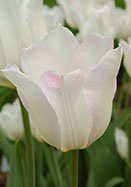
Opening from pale yellow buds, this elegant, mid-season beauty matures from a warm, creamy ivory to almost pure white. If you look closely you’ll often see minute touches of pink and red, botanical beauty marks inherited from its deep red parent, ‘Floradale’. Darwin Hybrid, 20-24”, zones 3a-7b(8bWC), from Holland. Chart and care.
|
|
|
|
An affordable 18th-century antique, “Emperor’s Crown” is still “magnificent for any purpose,” as C.S. Allen wrote in his 1893 best-seller, Bulbs and Tuberous Rooted Plants. Counterfeits are rife today, but our bulbs are the real deal. You’ll even see them blooming at Mount Vernon! Single Early, 13”, zones 3a-7b(8bWC), from Holland. Chart and care.
|
|
|
|
Red is the most traditional, iconic color in tulips, and ‘Kingsblood’ is one of the 20th century’s finest, most enduring reds. Tall, late-blooming, and stately, it’s drop-dead gorgeous interplanted with ‘Greuze’, or sprinkle a few among pastel tulips to add a bit of visual zest, like the maraschino cherries in the fruit cocktail your grandmother used to serve. Single Late, 22-24”, zones 3a-7b(8bWC), from Holland. Chart and care.
|
|
|
|
A very rare survivor from the days of Tulipomania in the 1630s, this crown-shaped tulip of burgundy and ivory was once sold for enormous sums. Today it may still seem expensive – but what else can you own from 1620 that costs so little? And with good care, it multiplies! Pronounced “Lock von Rhine,” Single Early, 14”, zones 4a-7b(8bWC), from the Hortus Bulborum. Chart and care.
|
|
|
|
A fitting tribute to a famed 20th century Dutch hybridizer, ‘Leen’ has huge dramatic flowers that make a bold statement in the garden. Bright weather-resistant cardinal-red flowers first show a yellow rim which quickly turns bright white at peak bloom. Strawberries and cream, anyone? Triumph, 18-20”, zones 3a-7b(8bWC), from Holland. Chart and care.
|
|
|
|
With bold flames and feathers of cherry-red on white, this striking English florists’ tulip was bred by a Lancashire weaver over 165 years ago. But who was Mabel? Wife? Daughter? Or maybe a favorite barmaid at one of the pubs where the tulip societies held their shows back then? True broken tulip, multiplies well, late blooming, 18”, zones 4a-7b(8bWC), from the Hortus Bulborum. Chart and care.
|
|
|
|
The graceful, vase-like shape of lily-flowered tulips like ‘Mariette’ evokes that of the earliest tulips to reach the West from Turkey in the 1500s. This multiple award-winner is a radiant rose-pink, deeper in the center of the petals and shading to silvery pink at the edges. Lily-flowered, late, 20-24”, zones 3a-7b(8bWC), from Holland. Chart and care.
|
|
|
|
Tall, shapely ‘Marilyn’ brings the tulip season to an elegant close with arching white flowers kissed with red. Nicholson calls this graceful beauty “one of the best” and we agree! Lily-flowered, 18-22”, zones 3a-7b(8bWC), from Holland. Chart and care.
|
|
|
|
With its classic 1950s name, this classic 1950s tulip is still “unsurpassed even after all these years,” writes Richard Wilford in his 2015 Plant Lover’s Guide to Tulips. An RHS AGM-winner, it’s wonderfully strong-growing and holds its big, luminous flowers on tall sturdy stems. Single Late, 26-28”, zones 3a-7b(8bWC), from Holland. Chart and care.
|
|
|
|
Named for a popular Dutch singer of the fifties and sixties, ‘Mieke Telkamp’ is a compact early-bloomer close enough to its wildflower roots to be likely to bloom in future years. Blossoms are initially nicely-tapered creamy yellow petals with a delicate pink blush. On sunny days the flowers open wide revealing cheerful bright yellow centers with a ring of red in their depths! Fosteriana, 10-12”, zones 3a-7b(8bWC), from Holland. Chart and care.
|
|
|
|
A bouquet of these may be mistaken at a distance for fully open red roses, but ‘Miranda’ blooms much earlier and has no thorns! Vibrant, velvety red petals create opulent, full flowers. A delight for the eyes, and some find her to have a sweet fragrance! Double, 12-14”, zones 3a-7b(8bWC), from Holland. Chart and care.
|
|
|
|
Gloriously lovely, ‘Negrita’ brings a much-coveted deep purple with hints of lavender, lilac and/or violet to the mid-spring. It provides an excellent contrast with yellows and oranges for dramatic bouquets and borders! Triumph, 16-18”, zones 3a-7b(8bWC), from Holland. Chart and care.
|
|
|
|
This uniquely colored, brown-inflected tulip has “a real ‘old-timey’ look to its garnet and primrose flowers,” as J. Horace McFarland wrote in 1938. Its shape is wonderfully old-fashioned, too, with lancet-pointed petals that curl back gracefully as they open in the sun. One of the so-called Cottage tulips, it was re-discovered by the Rev. Joseph Jacobs “in an old garden in Hanmer in 1905.” Cottage/Single Late, 18-22”, zones 4a-7b(8bWC), from the Hortus Bulborum. See our other brown tulips. Chart and care.
|
|
|
|
The great Gertrude Jekyll planted this very rare, sunset-colored tulip in her iconic early 20th-century perennial borders. A multiple award-winner, it remained popular well into the 1940s when the de Jager catalog praised it as “a beautiful orange-scarlet tinged old rose, sweet-scented, a grand tulip.” Cottage/Single Late, 18-20”, zones 3a-7b(8bWC), from the Hortus Bulborum. Chart and care.
|
|
|
|
We sell tons of this old tulip every year, even though doubles have been woefully out of fashion for decades now – a testament to its great beauty. It’s a frothy extravaganza of white and pink (not peach), like a lacy, Victorian valentine. If you’ve never grown double tulips, this is the one to start with – and what are you waiting for? Double Early, 10-12”, zones 4a-7b(8bWC), from Holland. See our other unusually fragrant tulips. Chart and care.
|
|
|
|
Garden designer Arne Maynard praises ‘Prince of Wales’ as “rare and subtle Breeder tulips” with “a wonderful depth of color” and we agree! Some see rich purplish maroon in its petals, others deep purple-browns – tuck a few near your door or window and let their exquisite beauty transport you back through time as well. Dutch Breeder/Single Late, 18-20”, zones 3a-7b(8bWC), from the Hortus. Chart and care.
|
|
|
|
Also known as ‘Sweetheart’ this very rare scarlet-red Dutch heirloom was named for the princess born in 1909 who would become Queen in 1948. She and her family found shelter in Canada during World War II and in gratitude for the Canadians who fought to free their country the Netherlands has ever since sent thousands of tulips to bloom in Ottawa every year. Single Late, 18-26”, zones 3a-7b(8bWC), from the Hortus Bulborum. Chart and care.
|
|
|
|
Irene’s warm, strong fragrance and unusual coloring – melon-orange flamed with subtle bronze-purple – make it one of the most distinctive tulips of the 1900s. It’s a favorite at Holland’s glorious Keukenhof gardens and easy to force indoors where you can enjoy its heavenly scent up close. Triumph, 14”, zones 3a-7b(8bWC), from Holland. See our other unusually fragrant tulips. Chart, care, and learn more.
|
|
|
|
Winner of the Award of Garden Merit by the Royal Horticultural Society, ‘Purissima’ brings classic style and elegance to the early spring garden and is sturdy enough to withstand any late winter storms! Gray-green leaves set off the pure white blossoms - and ‘Purissima’ is reported to be one of the best of her class for perennializing! Fosteriana, 16-18”, zones 3a-7b(8bWC), from Holland. Chart and care.
|
|
|
|
Enormously popular ever since its debut in 1940, this “satiny maroon-black” tulip (Anna Pavord) is vigorous and long-lasting in the garden. And it’s versatile, writes Jane Eastoe in her 2019 Tulips: Beautiful Varieties for Home and Garden – “the perfect foil for red, rusty orange, apricot, and copper tulips” as well as “very pretty with soft pink, violet, and white.” Single Late, 24”, zones 3a-7b(8bWC), from Holland. Chart and care.
|
|
|
|
This ethereal tulip is snowy white delicately blushed with pink and lilac-rose. No two are exactly alike, and the coloring spreads and intensifies as each tulip matures, like a pink and white sunrise, adding to the enchantment. But don’t be fooled by its gossamer looks — only the strong survive for as long as it has. Single Early, 10-12”, zones 4a-7b(8bWC), from the Hortus. Chart and care.
|
|
|
|
Weird name, cool flower. With “much rich beauty to commend it” (in the words of the 1929 Scheepers catalog), this true broken tulip is a swirling tapestry of “all shades of deep lilac and dark reddish rose” feathered and flamed on creamy yellow and white. “The whole is rich and strange” – and glorious! Single Late, 20-24”, late-blooming, zones 4a-7b(8bWC), from the Hortus Bulborum. Chart and care.
|
|
|
|
In Camelot’s “one brief shining moment,” England was known as Albion, and this luminous white tulip well evokes the magic of the Arthurian legends. From the 1880s until World War II, American catalogs praised its “snow white” petals, “robust habit,” and “great substance.” In the style of much older tulips, its petals are pointed — yes, beak-like — and as they mature they are faintly touched with rose. A.k.a. ‘Witte Valk’, Single Early, 10-12”, zones 4a-7b(8bWC), from the Hortus Bulborum. Chart and care.
|
|
|
|
Most people have never even seen a brown tulip, let alone grown one. Here’s your chance! 18th-century ‘Absalon’ is intricately patterned with swirling flames of dark chocolate and chestnut on gold. It’s a true broken tulip, a Dutch Bizarre from the Hortus Bulborum, and sure to cause a buzz. 16”, late, zones 4a-7b(8bWC). See more brown tulips.
Chart and care.
If you’d like to be notified when it’s back in stock, click to sign up for an email alert.
|
|
|
|
As OHG founder Scott looked up and down the rows at the Hortus Bulborum filled with hundreds of different tulips in bloom – all of them beautiful – ‘Archeron’ stood out as something special. It’s a deep garnet-red shaded with rust and smoke, well-named for the “river of woe” in the underworld of Greek mythology. Single Late, 20-24”, zones 4a-7b(8bWC), from the Hortus Bulborum.
Chart and care.
If you’d like to be notified when it’s back in stock, click to sign up for an email alert.
|
|
|
|
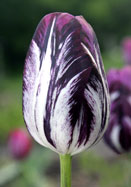
Historic? We’re not sure. Extraordinary? Yes! This true broken tulip was discovered at the Hortus Bulborum. It’s not clear whether it’s an heirloom whose label was lost or a newly-broken version of one of their other heirloom varieties, but it’s so stunning we couldn’t resist it. With dark purple flames on creamy white petals, it’s a tulip that Tulipomaniacs of the 1630s would have given a fortune to own! Single Late, 16-20”, zones 4a-7b(8bWC).
Chart and care.
If you’d like to be notified when it’s back in stock, click to sign up for an email alert.
|
|
|
|
With an unusually long, slender shape this lovely broken tulip was introduced by the legendary bulb-house of Krelage and Sons. In 1907 the Peter Henderson catalog praised it as “brilliant cherry rose flushed and striped with scarlet, violet, and white, very distinct.” Aka ‘Maid of Holland’, Single Late, 14-18”, zones 4a-7b(8bWC), from the Hortus Bulborum.
Chart and care.
If you’d like to be notified when it’s back in stock, click to sign up for an email alert.
|
|
|
|
A tulip for Mobile? Yes! And it’s hardy and multiplies in Boston and Denver, too! Although many sources offer this petite, charming wildflower, virtually all deliver cheap impostors such as hybrid ‘Lady Jane’ (oversized, and empty inside) or modern cream-to-yellow forms instead of the ancient rose and WHITE with its heart of deep, ravishing purple. Bill Finch of the Mobile Press-Register writes that in his garden our true clusiana has “come bursting out of the ground, each year better than the last.” It can do the same for you, in zones 6a-8b(10bWC), if you give it well-drained soil that’s relatively dry in summer. 10-14”, from Holland.
Chart and care.
If you’d like to be notified when it’s back in stock, click to sign up for an email alert.
|
|
|
|
Profiled by both Anna Pavord and Sarah Raven, ‘Doll’s Minuet’ has dancing lily-like flowers of bright rosy-purple petals, each highlighted with a green stripe. It extends the tulip season with late-blooming flowers that are sturdy and long-lasting. Viridiflora, 20-22”, zones 3a-7b(8bWC), from Holland.
Chart and care.
If you’d like to be notified when it’s back in stock, click to sign up for an email alert.
|
|
|
|
In the 17th and 18th centuries every fashionable Dutch tulip garden had one or more of the fabled ‘Ducs’, colorful short-statured tulips that are often the very first to bloom in the spring. This sweet variety from the Hortus’ collection has rosy red flowers with frosty crowns of white and is sure to delight gardeners now just as much as it did then. Single Early, 8-10”, zones 3a-7b(8bWC), from the Hortus.
Chart, care, and learn more.
If you’d like to be notified when it’s back in stock, click to sign up for an email alert.
|
|
|
|
Short, bright, and extra-early, these fairy tulips grew in every stylish garden from about 1600-1900. But when gardeners went crazy for tall, late, pastel tulips, the ‘Ducs’ all but vanished. A perfect little miniature at 5-7 inches tall, ‘Scarlet’ is classic and sublime. Very early, zones 4b-7b(8bWC), from the Hortus.
Chart and care.
If you’d like to be notified when it’s back in stock, click to sign up for an email alert.
|
|
|
|
You don’t have to be Goth to appreciate ‘Greuze’. Its dusky buds on dark stems open into flowers of deepest purple, and it often follows its first bloom with smaller, slightly later blooms to make a clump that’s informal and charming. Named for an 18th-century French artist, it’s hard to pronounce but “Grooz” is close enough for us. Single Late/Darwin, 23”, zones 3a-7b(8bWC), from Holland.
Chart and care.
If you’d like to be notified when it’s back in stock, click to sign up for an email alert.
|
|
|
|
Like a sunrise in slow motion, it opens with baby-smooth, pale yellow petals feathered with rose, and then day by day it transforms itself into a big, ruffled flower of creamy white flamed with purple. You will be enchanted! True broken tulip, late-blooming, 16-18”, zones 4a-7b(8bWC).
Chart and care.
If you’d like to be notified when it’s back in stock, click to sign up for an email alert.
|
|
|
|
Brown? You bet! And it’s fabulous. This is the unbroken, Breeder form of a tulip which may be better known in its broken, mahogany-on-gold Bizarre form. Although its broken version is flashier, this anything-but-plain brown tulip – with its shades of coffee, bronze, and amber – needs no improvement. Single Late, 18-20”, zones 4a-7a(8bWC), from the Hortus Bulborum. See our other brown tulips.
Chart and care.
If you’d like to be notified when it’s back in stock, click to sign up for an email alert.
|
|
|
|
Named for a fiery French statesman, this “handsome flower” is “bright chestnut-bronze with golden-bronze margin and bronze-black center,” to quote the 1931 catalog of London’s Barr and Sons. It’s also one of the rarest tulips we’re offering – so if you want it, don’t delay! Dutch Breeder/Single Late, 24-28”, zones 4a-7b(8aWC), from the Hortus Bulborum.
Chart and care.
If you’d like to be notified when it’s back in stock, click to sign up for an email alert.
|
|
|
|
“Supremely elegant” – that’s how connoisseur Anna Pavord describes this vibrant beauty bred by John Slater, author of the 1860 English Florist’s Guide, whose tulip collection numbered close to 20,000 bulbs. Named for his daughter, it’s an unusual “plated feather,” heavily marked with deep cherry red on white. Last offered in 2020, true English florists’ tulip, 14-16”, zones 4a-7b(8bWC), from the Hortus Bulborum.
Chart and care.
If you’d like to be notified when it’s back in stock, click to sign up for an email alert.
|
|
|
|
This lovely scarlet-orange tulip honors the Dutch Queen Wilhelmina who reigned from 1890-1948 and was a symbol of Dutch resistance during World War II. Fragrant blossoms are held on tall stems, good for cutting, and transition to include some sunny yellow shades at their tops. A sport of the ‘Lefeber’s Favourite’. Darwin, 20-22”, zones 3a-7b(8bWC), from the Hortus Bulborum.
Chart and care.
If you’d like to be notified when it’s back in stock, click to sign up for an email alert.
|
|
|
|
One of the break-out stars from our former Brown Sugar sampler, this “handsome Old Dutch Tulip,” to quote the Barr and Sons catalog of 1931, is “golden-bronze, the outer petals being flushed plum” – and it’s fragrant. Although it was officially introduced in 1913, Wister says it was listed by Krelage as far back as 1870. Dutch Breeder/Single Late, 22-26”, zones 4a-7b(8bWC), from the Hortus Bulborum.
Chart and care.
If you’d like to be notified when it’s back in stock, click to sign up for an email alert.
|
|
|
|
When the last US catalog dropped this in 1993, OHG founder Scott was inspired to start a small mail-order company – it was just too wonderful to let go extinct! It’s one of history’s most fragrant tulips (violets? orange blossoms?), with a scent that will draw you across the garden on a sunny day. It’s also so vigorous that it’s been returning for well over a decade here with no special care. Scarlet maturing to almost-orange, Single Early, 12”, zones 3a-7b(8bWC), grown exclusively for us in Holland.
Chart and care.
If you’d like to be notified when it’s back in stock, click to sign up for an email alert.
|
|
|
|
Regal, stunningly beautiful ‘Amalia’ is a bright cerise sure to enliven your spring garden and bouquets! This Hortus variety honors Dutch Prince Hendrik’s first wife (1830-1872) who was an early supporter of kindergartens in her native Luxembourg (and not to be confused with this century’s Princess Catharina-Amalia, born in 2003, who also has a tulip named in her honor.) Single Late, 20-24”, zones 3a-7b(8bWC), from the Hortus.
Chart and care.
If you’d like to be notified when it’s back in stock, click to sign up for an email alert.
|
|
|
|
In 1995 this elegant beauty was featured in a Garden Design article about a tiny new source devoted to heirloom bulbs, and suddenly we weren’t so tiny anymore. Well-described in the 1931 Scheepers catalog as “rose-pink with topaz lights and hints of fuchsia shadowing,” it was lost to us in 2002 when the last Dutch farmer quit growing it, but thanks to the Hortus we’re once again able to offer it to you. Single Late/Darwin, 18-22”, zones 4a-7b(8bWC).
Chart and care.
If you’d like to be notified when it’s back in stock, click to sign up for an email alert.
|
|
|
|
A true Rembrandt or broken tulip, this rare and seldom seen beauty has elongated goblet-like flowers glowing with flames and feathers of reds, yellows and oranges. Each flower will be its own unique work of art, so seize this opportunity to add one (or more) of these Hortus treasures to your own collection! Single Late, 16-18”, zones 3a-7b(8bWC), from the Netherlands.
Chart, care, and learn more.
If you’d like to be notified when it’s back in stock, click to sign up for an email alert.
|
|
|
|
Imagine a perfect white peony or a double white waterlily unfolding in the morning sun. That’s ‘Schoonoord’ (say SKOH-nord), lush and radiant. In 1935 Louise Beebe Wilder praised it for perennial borders, saying its “prestige as the best... has never been questioned. It is an old variety but invaluable.” And that’s still true! Double Early, 10-12”, zones 4a-7b(8bWC), from Holland.
Chart and care.
If you’d like to be notified when it’s back in stock, click to sign up for an email alert.
|
|
|
|
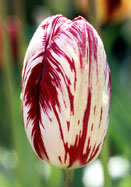
A lot has changed since 1760 (heck, the United States wasn’t even the United States back then), but ‘Silver Standard’ is still one of the world’s most exciting flowers. A true broken tulip, it’s a dazzling combination of purest white boldly splashed with red and guaranteed to leave you and your garden visitors standing open-mouthed in awe. Single Early, 12-14”, zones 4a-7b(8bWC), from the Hortus Bulborum.
Chart and care.
If you’d like to be notified when it’s back in stock, click to sign up for an email alert.
|
|
WHY GROW TULIPS? Nothing says “Spring” better than these diverse, colorful, elegantly simple flowers. They are truly icons of the season.
HISTORY — Tulips came to Europe from Turkey in the mid-1500s and zoomed to superstar status during the Dutch “Tulipomania” of the 1630s. Most prized then were “broken” tulips, feathered and flamed with contrasting colors by benign viruses. Every year we’re offering more of these rare jewels from our friends at the Hortus Bulborum.
In the early days, tulips were generally grown as mixed collections of choice individual specimens. Then with the rise of Victorian bedding-out in the mid-1800s, short, bright Single and Double Early tulips were massed in cookie-cutter beds in the lawn. Reacting against that style, early-twentieth-century gardeners favored taller, later-blooming, pastel tulips for their perennial borders.
SIZES, ETC. — We offer the largest bulbs available, 12+ cm, though species bulbs are naturally smaller. All are Dutch-grown (except two) and fall-shipped.
TULIP ARCHIVES — For customer raves, stories behind the bulbs, links, books, news, and more, see our Tulip Newsletter Archives.
TULIPS AS CUT FLOWERS — For tips for longer lasting bouquets, see our Bulbs as Cut Flowers page.
GETTING TULIPS TO LIVE FOREVER — Well, almost. Though they have a reputation for being short-lived, we know of tulips that have been blooming beautifully for decades. Here’s how to get the most out of yours.
For a start, you need to be in zone 7 or colder. (Gardeners in warmer zones can grow tulips as annuals, but you’ll need to chill them in the refrigerator for 8 weeks before planting.) Then most important, we’ve learned from experience, is keeping them DRY in SUMMER (as in their native homes). Try this: plant a few where you never water in summer — or near a thirsty shrub or tree — and see how well they return.
Beyond that, the basics include well-drained soil (improve heavy soil, or try raised beds), lots of sun, regular fertilizing, and — this is very important — letting the foliage ripen to yellow to feed the bulbs for next year’s bloom. Some authorities recommend deep planting, especially in the South — to 12 inches — but we say 6-8 inches is plenty.
Then there’s this age-old method: dig them up every summer, store them in a cool dry spot, and replant them in the fall. You’ll end up with more bulbs every year, guaranteed. Some varieties just last better, too — often Single Earlies, Single Lates, Lily-flowered tulips, and species.
And there’s a good reason why OLD VARIETIES OFTEN PERENNIALIZE BETTER: they were bred for gardens, not for commercial pot-flower and cut-flower uses as most modern tulips have been.
Tulips do best when planted in mid- to late fall, after the soil has thoroughly cooled. Later is better than earlier with tulips. If necessary, store in open bags in a cool, dry spot (or the refrigerator — NOT the freezer).
Neutral to slightly alkaline soil is ideal, though tulips are very adaptable. Set bulbs about 6 inches apart from center to center (or closer for a lush look). For each, scratch a tablespoon of bulb fertilizer into the surface soil (slow-release 10-10-10 is ideal). Use no manure. Water well and make sure the bulbs have reliable moisture throughout their growing period, from planting in the fall through the ripening of their foliage the following summer.
PROTECTING TULIPS FROM ANIMALS — Tulips, unfortunately, seem to be a favorite on most animal menus.
If animals dig your newly-planted bulbs try covering with plastic bird-netting, wire-mesh, a window screen, or burlap bags for a couple of weeks till the inviting smell of freshly-dug earth disappears.
If animals burrow to your bulbs, try lining the planting hole with wire-mesh, plant in wire-mesh boxes, or plant in buried pots covered with a square of chicken-wire.
Moles often disturb bulbs as they dig for grubs. Killing the grubs (try beneficial nematodes or spraying your lawn with bitter, organic Mole-Med) will reduce the moles — and this will discourage voles and mice which often use mole tunnels to munch on bulbs.
If animals eat spring growth, cover it with chicken wire for a few weeks (while they are hungriest), sprinkle blood meal around it, fence them out, or — our most successful solution — spray it with bitter, non-toxic Ro-pel, available at many garden centers. Bulbs can be dipped in Ro-pel before planting, too.
|