|
“In June, as many as a dozen species may burst their buds on a single day. No man can heed all of these anniversaries; no man can ignore all of them.”
– Aldo Leopold (1887-1948), American writer, philosopher, naturalist, scientist, ecologist, forester, professor, conservationist, and environmentalist
|
Iris and Daylilies Available to Order for Summer Shipment
|
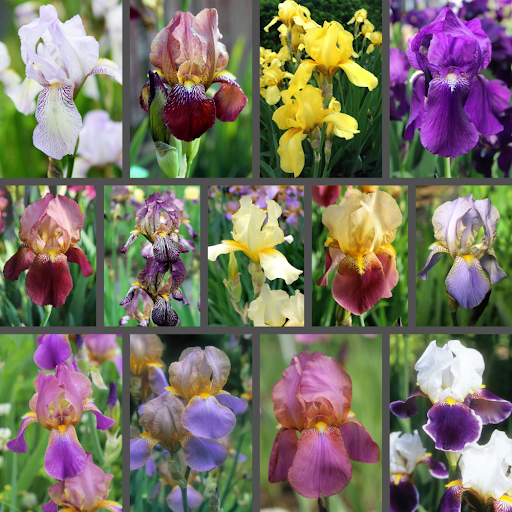
Pictured:
Bridesmaid (1859),
Colonel Candelot (1907),
Coronation (1927),
Crimson King (1893),
Dauntless (1929),
Demi-Deuil (1912),
Flutter-By (1924),
Frank Adams (1937),
Lavandulacea (1854),
Plumeri (1888),
Quaker Lady (1909),
Rosemohr (1948),
Wabash (1936)
|
If you missed out on the iris and daylilies you were hoping to add to your garden this spring, there’s still time to order. Our summer shipping season begins in mid-July, and we have a wonderful selection available, including over a dozen additional historic iris varieties we did not offer this spring.
|
Hortus Tulips Available to Order Now
|
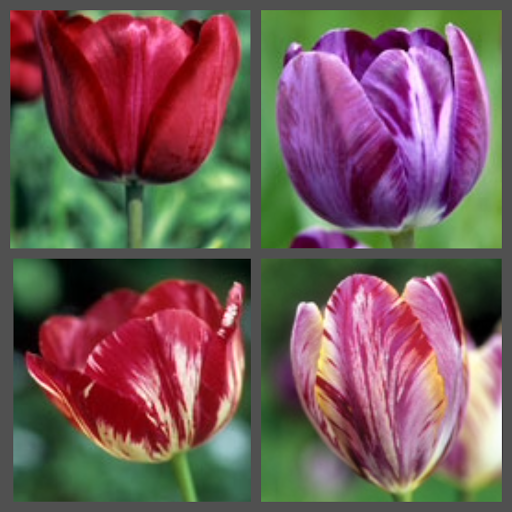
Pictured:
Archeron (1913),
Columbine (1929),
Julia Farnese (1853),
The Lizard (1903)
|
Thirty-three Hortus Bulborum tulips have been added to our website recently. Simply search “Hortus” to see all of our bulbs from the Hortus Bulborum.
|
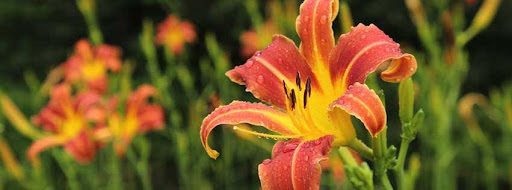
What Good is a Historic Daylily? (from the 2017 archives)
And why should we have historic daylily gardens?
|
|
|
In an excellent article for the American Hemerocallis Society, Linda Sue Barnes offers several answers to those questions, most of which also apply to the even bigger questions: What good is any historic flower? And why should we grow them today?
-
“Many historic daylilies have beautiful flowers. Many … are stars or trumpets, and … the simplicity of those flowers can provide a break from all the ruffles, fancy edges, and patterns of the modern daylily.”
-
“Many historic daylilies have spectacular garden habits,” such as ‘Autumn Minaret’ (1951) which “can easily reach 6 feet, with as many as 80 blooms on a scape.”
-
“Logically enough, most of the early cultivars that are still in gardens today multiply well and are very hardy.”
-
“Historic daylilies … extend the garden season.” In her North Carolina garden, Linda Sue has historic varieties blooming from early April - “a month before more modern cultivars begin” – well into September.
-
“Historic daylilies … win flower shows.” Linda Sue says four 1950s classics have “won Best in Show in our region in the last few years” and “many more have won Best in Section.”
-
“Historic daylilies … can, even today, be good parents.” Breeders such as Brian Mahieu are using them to create new daylilies with “vigor, clear colors, a lot of unusual forms, and fragrance.”
For photos of 16 historic daylilies and Linda Sue’s reasons for having historic daylily gardens, see the entire article on our website. There you’ll also find a link to the AHS website, where 20 historic daylily gardens - each with 50-100 historic varieties - are listed by region.
To see just how good historic daylilies can be, why not grow a few yourself? We’re offering 20 for July delivery - including the fragrant lemon lily (1570) and 4-6 foot tall Challenger (1949) - which Linda Sue would tell you are great garden plants.
|
Daylilies Don’t Like a Crowd
|
|
|
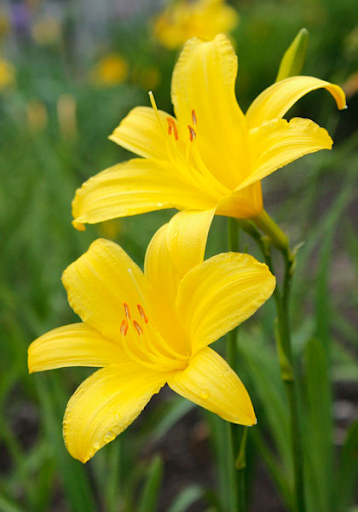
Daylilies are reliable bloomers that provide vibrant color throughout the summer. If you have daylilies in your garden, you've probably noticed that they may start out small with fewer flowers than a mature plant, but form large clumps fairly quickly. Over time—typically after three to five years—those crowded clumps may produce fewer flowers.
If you have some crowded daylilies, enjoy their blooms this summer, then plan to divide them after flowering is finished in the fall – they can also be divided in early spring.
There are several methods for dividing daylily clumps, but the first step is the same: dig up the entire clump. Next, wash the roots with a high-pressure garden hose to remove soil and expose the root system. This makes it easier to see where the clump can be divided. Separate the clump into sections containing three to five fans of leaves with a healthy root base using one of the following methods:
Daylily Divider – A specially designed, scissor-like tool with handles and forked blades that helps separate large, mature clumps. (See Don's Daylily Divider.)
Garden Knife – A sturdy knife with a serrated edge that easily cuts through dense, interwoven root balls.
Forks or Garden Spades – A traditional method that involves inserting two pitchforks or heavy garden spades back-to-back into the clump and prying them apart.
By Hand – Once the soil has been washed from the roots, hold a section of the clump in each hand and gently work the roots apart.
Once a clump has been divided, you can take advantage of having more plants for your garden or you can spread the beauty by giving some away.
|
Garden Conservancy Open Days
|

|
|
Thanks to Louise J. for the heads-up regarding the Garden Conservancy Open Days! This is another way to find gardens to tour that range in size, style, and climate. If you don’t see a garden near you, there are pictures of the open gardens, sortable using filters or locations.
Since 1995, the Garden Conservancy's Open Days program has opened the garden gates to thousands of private gardens across the country. Open Days offers the extraordinary opportunity to visit private sanctuaries across the country and learn from the gardeners behind these exceptional spaces.
From backyard jewel box gardens to beautiful estate gardens, to sweeping landscapes, the Open Days program highlights the breadth of traditions and perspectives within American gardening. Bound together by a mutual love of nature, art, design, and horticulture, the Open Days community is marked by a love of sharing ideas and expertise and learning from one another.
|
From Our Customers this Spring…
|
|
|
As we are picking orders, it is always fun to get one with a story included! They frequently offer a glimpse into gardening in other states and hardiness zones, as well as inspiring stories of the importance of plants in peoples’ lives. Here are just a few…
“I have a small purple iris given to me in the late 1970's by a friend of my mother's. It's very fragrant and might possibly be the Crimson King you have in your catalog. I want a yellow and a white variety to put with it. They can't be one of those new, gaudy hybrids. They must be small, fragrant, and fit in on the same scale. I googled "old fashioned yellow iris plants" and found your lovely website. It's just what I had in mind. I got carried away and ordered too many but couldn't resist. I will share them with a couple of friends who also appreciate beautiful things from the past. Thank you so much for growing and selling these lovely plants.” –Carla, from California
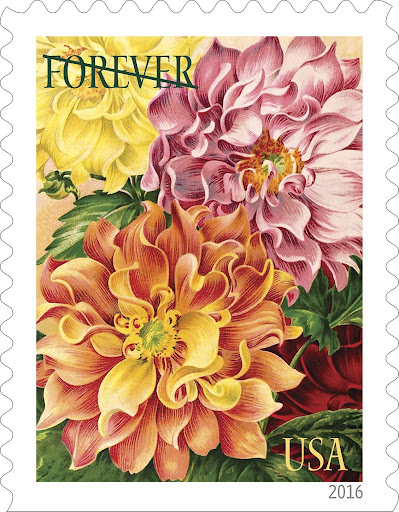
“My town hosted the first dahlia show in the US in 1901 and, to honor our dahlia history, I am planting a garden of heirloom varieties that grew on the same property (now town park) 100 years ago. Thank you for being a wonderful source for heirlooms!” –Mary, from New York
“My mom and I are growing all the flowers for my upcoming October wedding, and we are so excited for these beautiful dahlias! My mom ordered from your website before for my sister's wedding and had nothing but great things to say about your dahlias.” –Isabel, from Michigan
“The three Canna ehemanii I received last spring all settled in nicely, bulked up and stretched and are still flowering now. I am ordering two more for a completely different area.” –Deborah, from Oregon
|
To Make Sure Our Newsletter Reaches You Safely . . .
|
|
|
Please add newsletter@oldhousegardens.com to your email address book or safe/approved list today.
|
Follow Old House Gardens - Heirloom Bulbs
|
|
|
Follow us on Facebook and Instagram.
|
To Unsubscribe
|
|
|
We hope you enjoy our monthly Gazette, but if not UNSUBSCRIBE here and we’ll drop you from our list immediately.
|
|