

Bulb sales for fall 2021 are SUSPENDED.
Sign up for an alert for our end of season sale.
Fall 2025 shipping is over. Thank you for a great season!
Order these fall-planted bulbs NOW for delivery in October.
|
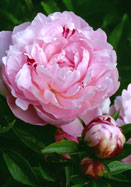
‘Mrs. Franklin D. Roosevelt’, 1932
WHY GROW PEONIES? They’re old-fashioned, easy to grow, offer armloads of flowers, and can live a century or more.
PEONY HISTORY — As Alice Coats wrote, “The long roots of the peony strike deep into the past.” Learn more.
TIPS FOR SUCCESS — Give them full sun and a little patience as they settle in and peonies will reward you for decades. Learn more.
|
|
|
|
|
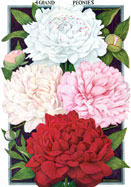
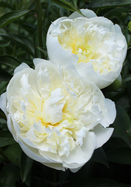
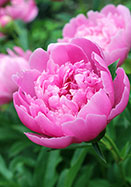
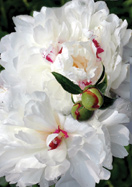
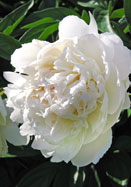
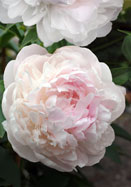
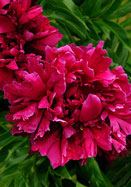
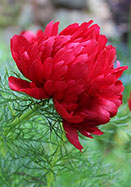
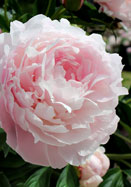
For a lifetime of luxurious beauty, plant our easy heirloom peonies this fall. We’ll send you 3 of our favorite old-fashioned doubles – 1 pink, 1 white, and 1 rose-red, all labeled and superb. Give them a sunny spot and they’ll reward you with abundant blooms for a century or more – and they make great cut flowers! For zones 3a-7b(8bWC) only, please.
For 2, 3, or more of each variety, order additional samplers. Peony care.
|
|
|
|
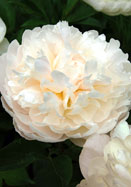
“One of the best peonies in the world, both for the landscape and for cut blooms” – so said peony expert Lee Bonnewitz in 1928, and we wholeheartedly agree. Its bountiful, snow-white flowers (blushed pink at first) are held upright on unusually strong stems. They’re famously long-lasting, both outside and in bouquets, and their rose-like fragrance is an added treat. By Kelway, 32-36”, late-mid season, zones 3a-7b(8bWC), 3-5 eyes, from North Carolina. Chart and care.
|
|
|
|
Magnificent, indeed! In the early 1900s when the Brands were creating the world’s finest red peonies, they described this dark jewel as one of their “very best,” with flowers “like a rose,” “wonderfully profuse,” and “the nearest blue of any red peony.” A century later, its robust growth and rosy-purple undertones make it still a very special peony. 34-38”, late, zones 3a-7b(8bWC), 3-5 eyes, from Iowa. Chart and care.
|
|
|
|
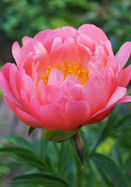
Illinois hybridizer Samuel Wissing spent over 25 years developing his famous coral peonies and this APS Gold Medal winner is one of his best! Strong stems hold large semi-double blossoms that open deep coral-peach with golden centers softening over time to salmon and then to ivory. David Michener raves “The changing color tones flow so well that it is a delight to behold…Would that even a handful of summer sunsets were equal to this peony’s bloom.” Mildly fragrant and long-lasting when cut. 30-36”, early, zones 3a-7b(8bWC), 3-5 eyes, from Iowa. Chart, care, and learn more.
|
|
|
|
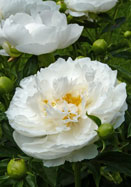
Grown and painted by Monet, this deliciously fragrant peony has been a favorite for over 150 years. Its abundant flowers open as “creamy chalices” (Harding, 1917) lit by a golden glow and mature into perfect white cumulus clouds. RHS AGM, strong stems, 3-5 eye roots, 34-38”, mid-season, zones 3a-7b(8bWC), from Iowa. Chart and care.
|
|
|
|
This richly fragrant, deep pink relic is one of the oldest peonies of all, and yet, writes expert Martin Page, it’s “still one of the best.” Introduced in France soon after the first lactiflora peonies arrived from China, it has been cherished ever since (even in the South) for its “good form, strong color, and delightful fragrance” (Boyd, 1928). 36-38”, early-mid, zones 3a-8a(9aWC), 3-5 eyes, from Iowa. Chart and care.
|
|
|
|
This exquisite jewel, brought into gardens from the wilds of Ukraine, holds its small, bright red flowers above mounds of finely cut foliage. Less than two feet tall and blooming weeks before most peonies, it was listed by Philadelphia nurseryman Bernard McMahon in 1806, carried west by the pioneers, and blooms today in abandoned cemeteries throughout the Great Plains. Recommended for experienced gardeners, 14-22”, zones 3a-7a(8aWC), 3-5 eyes, from Minnesota. Chart, care, and learn more.
|
|
|
|
The most famous peony of all, ‘Festiva Maxima’ has been a standard of excellence since Hovey’s of Boston first offered it in America in 1852. Its big, sparkling white flowers are highlighted by a few dribbles of crimson, its stems are strong, and it blooms reliably even in the South. 3-5 eye roots, 34-36”, early-mid season, zones 3a-8a(8bWC), from Holland. Chart, care, and learn more.
|
|
|
|
This “truly magnificent” peony with its “large, pure white” flowers of “perfect form” (to quote the Wild catalog of 1955) was introduced by the legendary Hans Sass of Nebraska – breeder of scores of award-winning iris, daylilies, lilacs, and peonies – and named for his flower-loving nephew and heir. Lightly fragrant, strong stems, 32-36”, late mid-season, zones 3a-7b(8bWC), 3-5 eyes, from Iowa. Chart and care.
|
|
|
|
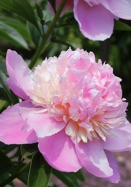
The distinctively striped buds of this rare peony ramp up the anticipation for its big, rosy pink flowers. Introduced during the Arts and Crafts era, it has a romantically “loose and fluffy” form (Boyd, 1928) that may remind you of roses or lotus blossoms. Its name honors an Illinois congressman who championed women’s rights – and loved peonies. 34-36”, mid-season, zones 3a-7b(8bWC), 3-5 eyes, from Iowa. Chart and care.
|
|
|
|
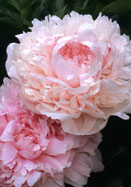
One of our all-time favorite peonies, baby-pink ‘Madame Ducel’ is a couple of inches shorter than most peonies. What really sets it apart, though, is its exquisitely composed flowers, each looking like a scoop of strawberry ice cream set on a tiny pink plate. Grown exclusively for us from stock we rescued from Iowa’s Sherman Nursery which closed in 2012 after 128 years in business. 3-5 eye roots, 28-30”, mid-season, zones 3a-7b(8bWC), from Iowa. Chart and care.
|
|
|
|
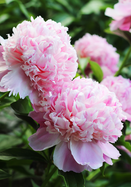
Although not as famous as its sister ‘Mrs. Franklin D. Roosevelt’, this rarely offered beauty is just as wonderful. It’s taller than most peonies – perfect for a featured spot or the back of your perennial border – with strong stems and fragrant, rose-shaped flowers of a dreamy apple-blossom pink. Minneapolis-bred by A.B. Franklin, 38-42”, late mid-season, zones 3a-7b(8bWC), 3-5 eyes, from Iowa. Chart and care.
|
|
|
|
One of only ten lactifloras to win the RHS Award of Garden Merit, this luxurious Victorian is one of the world’s most popular peonies. Even in the South, says guru Felder Rushing, its huge, fragrant blooms are “absolutely dependable.” 3-5 eye roots, 30” mid-season, zones 3a-8a(8bWC), from Iowa. Chart and care.
|
|
|
|
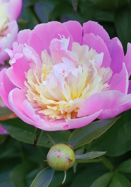
One of the most fragrant peonies of all, over 150-year-old ‘Philomele’ opens its broad pink guard petals to reveal a frothy heart of amber which gradually matures to pink, often with a tuft of broader petals emerging from the center. The transformation is fascinating – and the fragrance is heavenly! By Calot, free-blooming, strong stems, 30-32”, early-mid season, zones 3a-7b(8bWC), 3-5 eyes, from Iowa. Chart and care.
|
|
|
|
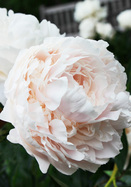
Renowned for its unusual color, a deep cream tinged with buff and pale pink, this opulent French variety reminds us of the lushest antique roses - and peony-maven Alice Harding raved in 1923 that “This rare coloring, combined with the heavy texture of the petalage, gives the bloom a radiance equaled only by pearls of finest Orient.” Bred by Lemoine, late-blooming, medium height, zones 3a-7b(8bWC), 3-5 eyes, from Iowa. Chart and care.
|
|
|
|
With its old-rose fragrance and lavender undertones, this ethereal peony is a special treat in bouquets. Maturing from softest pink to white, it was bred by Edward Auten Jr. of Illinois who – of the more than 300 peonies he introduced – rated it one of his top five. Large flowers, stiff stems, 32-34”, late-blooming, zones 3a-7b(8bWC), 3-5 eyes, from Iowa.
Chart and care.
If you’d like to be notified when it’s back in stock, click to sign up for an email alert.
|
|
|
|
Although fragrant red peonies are hard to find, this rose-scented legend is “positively sweet-smelling” (Harding, 1923). On wiry stems, its satiny, deep crimson flowers are just the right size for gardens and bouquets. Free flowering, 3-5 eye roots, 30-32”, mid-season, zones 3a-8a(8bWC), from Iowa.
Last offered in 2024. If you’d like to be notified when it’s back in stock, click to sign up for an email alert.
|
|
PEONY HISTORY – “The long roots of the peony strike deep into the past,” Alice Coats writes in Flowers and Their Histories. The Roman Pliny called them the oldest of plants, and they’ve been grown in Asian gardens for thousands of years.
The first peonies brought to America by the colonists were forms of Paeonia officinalis, a European peony with herbal uses that’s often called the “Memorial Day piney.” Chinese forms of P. lactiflora arrived in the early 1800s, causing a hubbub, and before long many new varieties were being introduced by French and then British breeders. Enthusiasm peaked in the early 20th-century when peonies were enormously popular for both garden and cut-flower use. American breeders came to the fore then, and millions of blossoms cut in the “soft marshmallow” stage were shipped to florists across the country.
|
PEONY ARCHIVES — For customer tips and raves, the stories behind the flowers, links and books, history, news, and more, see our Peony Newsletter Archives.
PEONIES AS CUT FLOWERS — For tips for enjoying longer lasting bouquets without damaging your plants, see our Bulbs as Cut Flowers page.
PEONY PLANTING AND CARE — Peonies are tough, undemanding perennials that can bloom happily for a century or more with little care.
Plant in early fall. Do not delay! Since peonies are planted only 1-2 inches deep, the soil around them will freeze much earlier than it will for bulbs planted 6 inches deep. If they don’t have enough time to establish new feeder roots before the ground freezes, they will struggle and could fail altogether.
Choose a sunny to lightly shaded spot with good air circulation and plenty of room for them to grow. Because they like ample water, they do best in somewhat heavier (clay) soils and away from the roots of trees and shrubs.
Peony roots and eyes (buds) are brittle, so plant carefully. Dig a generous hole and position the rootstock so the eyes face up and are no more than 1-2 inches below the surface of the soil once it’s been filled in and firmed. Shallow is best; deep planting leads to poor or no bloom. Mark the spot with a stake or peony ring to protect it. Water deeply, and maintain even soil moisture until the ground freezes to help the plant develop as many feeder roots as possible its first fall.
To protect these delicate new roots the first winter, apply a winter mulch. After the ground freezes, mound the newly planted area with 2-4 inches of soil or 5-8 inches of a fluffy, non-matting mulch such as straw, cornstalks, peat moss, or evergreen boughs — but not leaves.
In spring, be sure to remove the mulch before top-growth begins, and be careful not to injure new sprouts. Different varieties will emerge at different times, so patience is advised. Scratch a couple of tablespoons of balanced fertilizer (10-10-10 is ideal) into the soil around the plant, outside the ring of stems, as its leaves begin to unfurl. Water throughout spring and till after bloom-time, especially the first year.
Bloom will be meager the first year as the plant pours most of its energy into establishing a strong root system. More blooms will follow the second year, and even more the third. As you cut blooms, leave as much foliage as possible to continue feeding the plant.
Staking – Even the strongest peony stems will bow when their gloriously double flowers are drenched by rain. Most of the time, though, they’ll stand back up if you gently shake the water out immediately afterwards, so most gardeners grow their peonies au naturel. We like to give them more support, though. See our Supporting Peonies page for two options: cheap and easy and the Hildene star.
In the fall when the leaves begin to turn brown, cut the stems to the ground, collect all the foliage, and throw it away instead of composting it. Though peonies are generally healthy and tough, this will help prevent diseases such as botrytis blight and leaf blotch from getting a toehold or carrying over to the next season.
After the first spring, fertilize only sparingly. Peonies generally need little fertilizer and plants that are over-fertilized will not bloom well. If you do fertilize, keep it away from the crown of the plant where there are no feeder roots. Spread it instead 6-18 inches from the crown, work it into the soil, and water well.
|