|
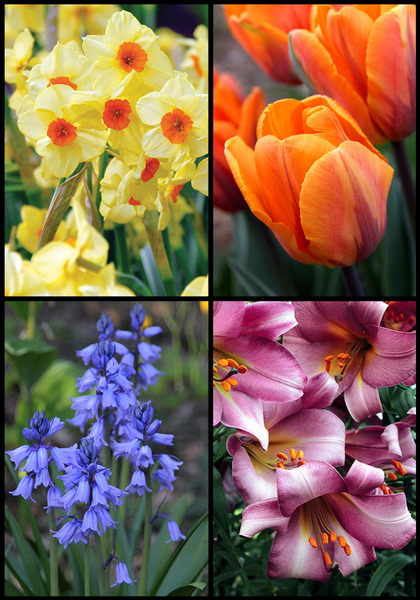
“Gardening is how I relax. It’s another form of creating and playing with colors.”
- Oscar de la Renta, Dominican fashion designer
|
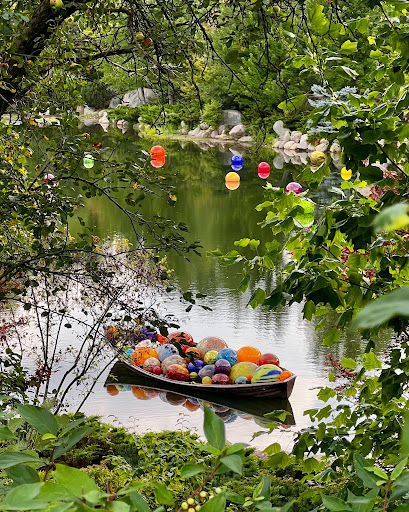
Chihuly at Meijer Gardens in Grand Rapids, MI
(indoor exhibit extended through January 10, 2027)
|
|
August Is the Perfect Time to Plan for Fall Bulb Planting
|
|
|
|
Do you remember admiring your spring garden and making mental notes about what you'd like to add next year? Now is the perfect time to turn those ideas into plans.
Need a little inspiration? Browse through your photos of your spring garden or simply explore our selection of fall-planted bulbs. Our website is filled with beautiful fall-planted bulbs—including crocus, daffodils, hyacinths, lilies, peonies, tulips, and many more—available to order now for October delivery. You're sure to rediscover the colors, varieties, and combinations you loved—and maybe even find a few new favorites to brighten next spring's garden.
If you can’t decide which bulbs to order, we have samplers filled with a variety of bulbs that are suitable for your hardiness zone.
|
Divide Bearded Iris and Defeat Borers: Now is the Time!
|
|
|
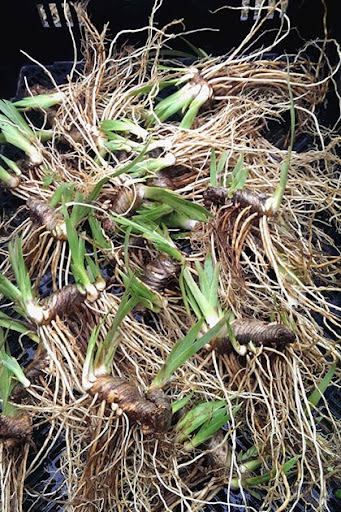
If your iris plantings have become over-crowded, or you want to share some with friends, now is the time to dig and divide them. “It's easy, and fun,” our friend Ken Druse says - see his video on dividing iris. “I dig up my iris rhizomes with a garden fork when they are dormant – now. Most of the soil will fall off the thick rhizome and reveal slender roots. I trim back the leaves into ‘fans’ and cut off the oldest section of rhizome (which will not bloom again). I dip the rhizome (holding it by the leaves) in a 10% solution of household chlorine bleach for about ten seconds. I set them out to drain on some newspaper, and then replant with the top of the rhizome just at the surface of the soil. Sun-baked rhizomes bloom best.” He adds that, “older varieties of bearded iris do not need dividing as often as newer ones.”
|
Love Irises, but Dread Dividing?
|
|
|
|
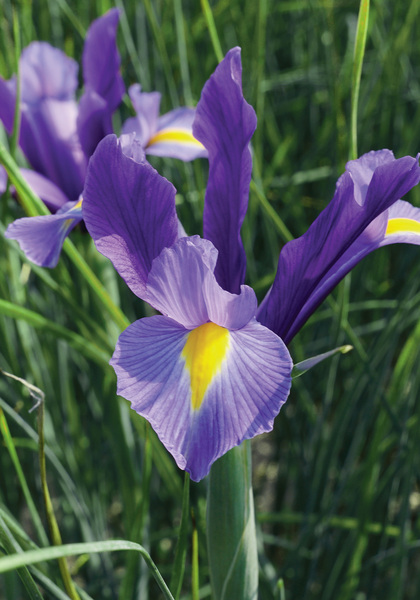
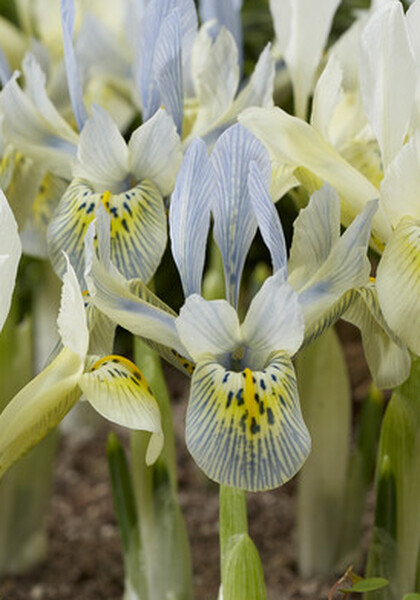
Old House Gardens is offering Iris holandica, Sapphire Beauty iris (1953) and Iris histriodes, Katherine Hodgkins iris (1955) for fall planting. These multiply without needing to be divided like bearded iris.
|
Gardening Through a Dry Summer
|
|

|

|
|
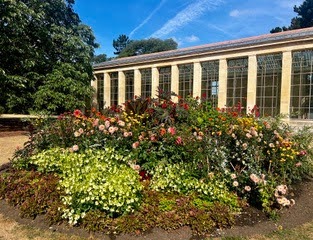
Kew Gardens; Sissinghurst Castle and Gardens; Kensington Palace Sunken Garden
|
|
|
The climate has been a challenge for gardeners all over the world this year. Here in southeast Michigan, we’ve had a drier-than-average summer, with the rare significant rainfall often accompanied by damaging winds. We watch the forecast as rain heads our way, or hear about a big storm moving toward us from Chicago, only to have it break up before it reaches us.
In an article from our 2002 OHG archives, Scott Kunst offered some reassuring advice about dry summers:
“If you haven’t seen rain in way too long, one bit of good news is that bulbs are built for drought and most of yours should be fine. Some, like tulips and hyacinths, may even perform better than ever next spring, since they prefer dry summers—as in their ancestral homelands.”
He points out an exception: newly planted bulbs do need water and are especially vulnerable to drought. In general, bulbs need regular watering from fall until about six weeks after they finish blooming.
Cannas, dahlias, and glads need regular water throughout the growing season. One way to make sure they receive enough moisture is to create a ring of soil around each plant and fill it with water every day or two. For plants growing in pots, a saucer underneath the container can help retain water. Regular feeding can also give plants a boost as they cope with a difficult growing season.
Drought was especially evident during a recent trip to southeast England, where above-average temperatures—including several days over 90°F—and a record 42-day stretch without rain had taken their toll. Kew Gardens experienced a rain-free July that continued into August, right up until the day we left. Grass in parks and gardens was brown, and trees were showing signs of stress. Yet there was still plenty of life to be found, and the grass is expected to recover once the rains return.
There was an unexpected discovery as a result of the drought: traces of centuries-old formal gardens and buildings began to appear where they had been hidden beneath grass for generations. As Country Life reported on August 9, 2026, the drought revealed long-lost features of historic landscapes that might otherwise have remained concealed.
Nature has a remarkable ability to endure challenging conditions, and this summer has certainly reminded us of that. While our gardens may look tired after weeks of heat and drought, many plants are more resilient than they appear.
And, I was very happy to hear that it finally rained in southeast England just after we flew home!
|
A Fashion Designer’s Inspiration from Gardening
|

|
|
In 2010, Oscar de la Renta self-published a limited-edition book about his Connecticut property, Brook Hill Farm. In the preface, he writes “A garden is probably the most spiritual and pure of joys that one is ever likely to encounter...it also teaches you patience and humility. In a garden one can not reflect on something negative but only think of positive things.”
In a Cottages and Gardens article (reprinted from The Style, Inspiration, and Life of Oscar de la Renta, (c) 2014.), an interview with this iconic fashion designer reveals just how deeply gardening influenced both his creative work and his outlook on life. Reflecting on the meaning of gardening, he said:
“A garden is probably the most pure and spiritual of joys—a communion with nature and beauty in their most simple and fundamental forms. It is an experience that needs to be lived at every instant. In a garden, one cannot reflect on something bad. What is truly wonderful is that it teaches you a lesson about life’s continuity. In a sense, a garden is a fragile vision that can quickly disappear out of neglect, but with constant work and tender love, it can preserve beauty forever.”
These words beautifully capture the connection between creativity, nature, and the care required to cultivate something lasting and beautiful. As you divide iris and daylilies, dig and store bulbs for winter, find new varieties to add to your garden this fall, and plant for the seasons ahead, we hope you'll experience that same sense of continuity. Each task is part of an ongoing cycle of renewal, nurturing both the garden and the gardener, and each season brings the anticipation of beauty yet to come.
|
To Make Sure Our Newsletter Reaches You Safely . . .
|
|
|
Please add newsletter@oldhousegardens.com to your email address book or safe/approved list today.
|
Follow Old House Gardens - Heirloom Bulbs
|
|
|
(hyperlinks https://www.facebook.com/HeirloomBulbs and https://www.instagram.com/old.house.gardens/
|
To Unsubscribe
|
|
|
We hope you enjoy our monthly Gazette, but if not UNSUBSCRIBE here and we’ll drop you from our list immediately.
|
|