




Here’s a grab-bag of OTHER INTERESTING STUFF from our email Gazette and past catalogs, starting with the most recently published. For other topics, please see our main Newsletter Archives page.
To subscribe to our FREE email newsletter, click here.
“Monarchs in the Rough” – Golfing for Butterflies
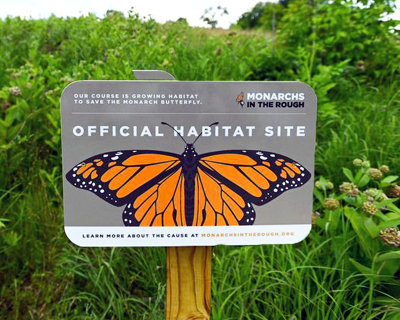
Can we save the monarchs?
Populations of America’s favorite butterfly have plummeted 90% over the past 20 years but a new program is hoping to change that by planting milkweed – and raising awareness – at golf courses around the country.
Co-sponsored by Audubon International and the Environmental Defense Fund, Monarchs in the Rough “connects and supports golf course staff as they plan, install, and manage habitat projects” for monarchs. Along with providing “regionally-appropriate milkweed seed” to establish “about one acre of high-quality monarch habitat,” the innovative program also offers “signage, posters, and technical guidance to golf course managers as they install and manage habitat, and as they communicate with course members about their efforts to save the monarch.”
Doesn’t that sound great? To learn more, or to enlist your favorite golf course in the program, visit monarchsintherough.org/. (July 2019)
“Thanks to You, I’m Starting a Flower Farm!”
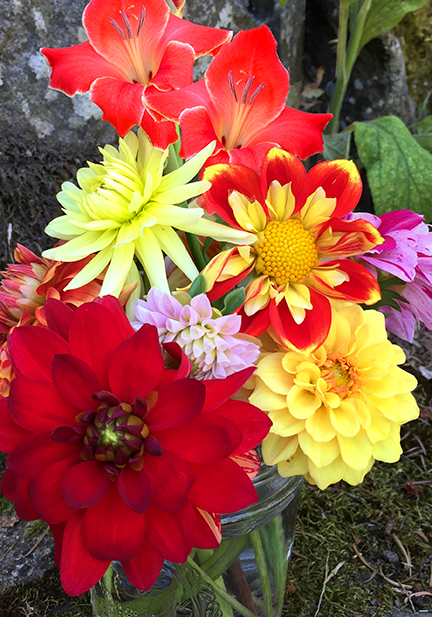
An email with that happy subject line arrived here recently from our long-time customer, Alicia Guy of Shoreline, Washington.
“After 17 years of planting OHG bulbs and dahlia tubers,” Alicia wrote, “I’m going to live on a grander floral scale! All of your high-camaraderie notes on invoices have nudged me over the edge. This spring I am starting Bitty Bouquet Flower Farm in Duvall, just outside of Seattle. I’m going to focus on heirloom flowers, most particularly dahlias.
“Just before Scott retired, I called to thank him for how much you’ve contributed to my garden life. The conversation wandered to my secret dream of having a small heirloom flower farm and, of course, he made it seem like that could be meaningful and rewarding work.
“I’ve been bowled over by how much enthusiasm taking this risk has generated with my family, friends, and (now former) co-workers, and I’m so excited to see where it all might lead. You can follow my journey at instagram.com/bittybouquet/, and thanks again for your long, slow part in this crazy mid-life career shift!”
Congratulations, Alicia! Selling heirloom bulbs was a “crazy mid-life career shift” for me, too, and though it was a lot of hard work and worry, it brought me a LOT of joy. May the beauty of your flowers and the happiness of your customers sustain you, and remember, as you said at the end of your email, “Spring is inevitable!” (April, 2019)
Our Immigrant Gardens
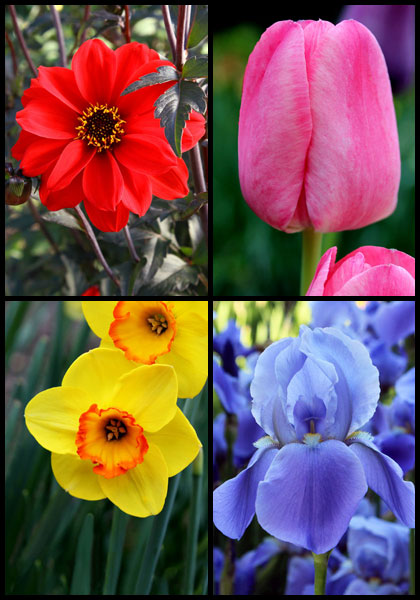
With the national debate on immigration raging, and Independence Day just past, We’ve been thinking a lot lately about the plants in our gardens that have come from other countries.
From tulips and peonies to dahlias and iris, our gardens are filled with immigrants. And although it’s possible to have a garden of only native plants, I think gardeners of all persuasions would agree that our lives have been enriched by 99% of the once-foreign flowers that have made themselves at home here.
So here’s a list of where the bulbs we offer came from originally. As you may notice, some are listed in more than one area because, to Nature, it’s all one world.
Mexico and South America – dahlias, tuberoses, rain lilies, oxblood lily.
Africa – gladiolus, freesia, crocosmia.
China, Japan, and Korea – most peonies, many daylilies, tiger lilies, Formosa lily, gold-band lily, red spider lily, pink surprise lily.
Asia from Turkey and Syria to Afghanistan and Mongolia – tulips, hyacinths, crocus, bearded iris, regal lily, Madonna lily, Byzantine glads, Elwes snowdrop, Turkish glory-of-the-snow, Allium sphaerocephalum, sowbread cyclamen, sternbergia, Siberian squill (which, despite its name, is not from Siberia).
Europe – daffodils, bearded iris, crocus, martagon lilies, Madonna lily, Byzantine glads, lemon daylily, traditional snowdrops, snowflakes (Leucojum), Spanish bluebells, winter aconite, snake’s-head fritillary, Grecian windflower, Allium sphaerocephalum, sowbread cyclamen, sternbergia.
North America –trillium, jack-in-the-pulpit, Dutchman’s breeches, Lilium superbum. (July 2018)
“We Believe Most of the World’s Ills Can be Solved in a Garden”

How’s that for an ambitious statement? Or should I say an inspiring statement?
Our friends at the Pacific Horticulture Society recently adopted a new motto – “People Connecting with the Power of Gardens” – which encourages us to see gardening as more than pretty flowers and endless weeding. As they explain it, “We believe most of the world’s ills can be solved in a garden, if we nurture landscape literacy and cultivate relationships. It is the whole ecosystem that counts, and people are very much a part of that ecosystem.”
Indeed we are! Thanks, PHS, for reminding us all that what we learn in our gardens and the joy we find there can make the world a better place – if we share it over the garden fence with our neighbors near and far. (June 2018)
Toasting Spring with Black Tulip Ale

We love bulbs, and I love beer, so when I saw a beer called Black Tulip at the grocery store recently, I felt duty-bound to drink a few and give you a full report.
Black Tulip is a tripel ale brewed by Michigan’s New Holland Brewing Company and named for a novel by Alexander Dumas (author of The Three Musketeers) set in 17th-century Holland.
Tripels are “similar to Belgian-style golden strong ales,” I learned at craftbeer.com, except they’re “generally darker and have a more noticeable malt sweetness.” Popular in Belgium and the Netherlands, they’re best enjoyed in a goblet-shaped “tulip glass,” and New Holland claims theirs is actually “dusted with tulip petals.”
Online, fellow beer drinkers have described Black Tulip as “a big, full-flavored, complex, easy to drink beer” that’s “very creamy and smooth,” with “lots of fruit and spice” and “a reasonable dose of hop bitterness.” I’d agree with all of that, and I liked Black Tulip a lot. Tripels have a higher alcohol content than most beers, though, so please drink it with care.
Black Tulip is available in 26 states. To find it near you, enter your zip code at beermenus.com/beers/5675-new-holland-black-tulip – and as our Dutch friends say, Proost! (Mar. 2017)
Work and Learn in the Gardens of the Smithsonian

If you’re in college or grad school, or recently graduated, here’s an exciting opportunity. Imagine working and learning in the gardens of the Smithsonian Institution, the world’s largest museum complex. Applications are currently being accepted for internships that offer “a strong practical background to emerging professionals hoping to enter the public gardening world.”
The internships focus on various areas such as education and outreach, the greenhouses, landscape architecture, and even the photographic treasures of the Archives of American Gardens. Learn more at gardens.si.edu/get-involved/internships.html. (Dec. 2016)
Home-State Pride: Thrillist Ranks Michigan #1

Thrillist, the popular website that describes itself as “obsessed with helping guys live fun lives,” recently posted a “Definitive and Final Ranking of All 50 States” – and we’re proud to say that Michigan topped the list!
According to Thrillist, “Far too much of the Michigan narrative centers on Detroit and its many issues. The Motor City’s become a scrappily rising underdog you can’t help but root for, but Michigan’s greatest strengths lie in the state as a whole.
“Did you know Michigan has more coastline than any state other than Alaska? Did you know it has such an embarrassment of beer riches that you can easily hit Bell’s and Founders in the same afternoon? Did you know the UP is so remote and uniquely beautiful that it almost feels like a secret 51st state where they inexplicably love British meat pies?”
There’s more, but you get the gist. To see where your state ranked and enjoy more of the authors’ goofy commentary, go to thrillist.com/travel/nation/ranking-the-united-states-of-america-from-best-to-worst. (Aug. 2016)
$400,000 Oak: One Year after the Big Move
The 250-year-old, 65-foot-tall oak tree that the University of Michigan dug up and moved has survived its first year in apparently good shape. The tree made national headlines last fall when it was moved to make way for an expansion to the Ross School of Business. (If you missed it then, read “Save the Oak!” in our Newsletter Archives.)
“It leafed out nicely and had great spring color,” U-M horticulturist Marvin Pettway said, and “it had a full crown of leaves well into the beginning of October.” Although the after-effects of transplanting sometimes don’t show up until the second or even third year, getting that magnificent heirloom through its first is something to be celebrated. Read more here. (Nov. 2015)
It’s Adopt a Shelter Dog Month — and Wilma Loves Tink
To celebrate Adopt a Shelter Dog Month, here’s a happy story from one of our new customers, Wilma Willette of Bloomington Springs, TN:
“For my 80th birthday, I asked for a small dog. I went to the shelter and picked out one named Tink. She had a bad hip and front paw. Someone was not very good to her.
“Tink is a rat terrier. She hates to get up every morning (I have to pull her out of bed) and she loves to eat. Now you cannot tell there was ever anything wrong with her hip and foot. She is about one year old, very smart and very spoiled.”
My wife and I are sure glad we adopted our first dog a couple of years ago, a lovable little rat terrier we named Toby — and he sure seems glad we did, too. To learn how you can help give shelter animals in your area a second chance, or to start looking for your own Tink or Toby, go to PetFinder.com. (Oct. 2015)
Earthworms: The Good, the Bad, and the Latest Research
“Why would anyone want to destroy earthworms?” we asked in our July article “Advice from 1683: Killing Earthworm Pests with Tobacco.” In the 1600s it was to keep unsightly worm castings from blemishing gravel paths, but today there’s a different reason.
“In northern parts of the country, earthworms are not native,” our good customer Robin Schachat of Shaker Heights, Ohio, explains. “It’s now thought that the greatest loss of the duff layer in our native forests is due to earthworm infestations, not to deer browsing.”
Although worms can be beneficial in the disturbed and compacted soils of our backyards, since the last glaciers retreated some 14,000 years ago there have been no native worms in the area once covered by them —north of NYC and the Ohio and Missouri rivers, and in the Rockies and parts of Washington — so in those areas forest ecosystems evolved without worms.
Recent research at the University of Minnesota has shown that “without worms, fallen leaves decompose slowly, creating a spongy layer of organic ‘duff.’ This duff layer is the natural growing environment for native woodland wildflowers. . . . Invading earthworms eat the leaves that create the duff layer and are capable of eliminating it completely. Big trees survive, but many young seedlings perish, along with many ferns and wildflowers.”
Although there are native earthworms in unglaciated parts of the country, if you live further north we encourage you to learn more at the Invasive Earthworms page of the Minnesota DNR and at the Great Lakes Earthworm Watch. (Oct. 2015)
Autumn is the “Real Spring”
Although the Czech writer Karel Capek (1890-1938) is best known today for coining the word “robot,” he was also an outspoken anti-fascist and an avid gardener. In his 1929 classic The Gardener’s Year he writes:
“While we only look at Nature it is fairly true to say that autumn is the end of the year; but still more true it is that autumn is the beginning of the year.
“It is a popular opinion that in autumn leaves fall off, and I really cannot deny it; I assert only that in a certain deeper sense autumn is the time when in fact the leaves bud. Leaves wither because winter begins; but they also wither because spring is already beginning, because new buds are being made, as tiny as percussion caps out of which the spring will crack.
“It is an optical illusion that trees and bushes are naked in autumn; they are, in fact, sprinkled over with everything that will unpack and unroll in spring. It is only an optical illusion that my flowers die in autumn; for in reality they are born. We say that Nature rests, yet she is working like mad. She has only shut up shop and pulled the shutters down; but behind them she is unpacking new goods, and the shelves are becoming so full that they bend under the load. This is the real spring; what is not done now will not be done in April.” (Sept. 2015)
Celebrate Dirt with the International Year of Soils
Getting your hands in the dirt is one of the great pleasures of gardening (am I right?), and we gardeners understand first-hand the importance of soil. Now you can help spread the word about this critical natural resource by celebrating the International Year of the Soil. The global campaign is built around six key messages that highlight how we all depend on soils:
1. Healthy soils are the basis for healthy food production.
2. Soils provide us with plants we use for feed, fiber, fuel, and medicine.
3. Soils support our planet’s biodiversity, hosting a quarter of the total species.
4. Soils help combat climate change by playing a key role in the carbon cycle.
5. Soils store and filter water, improving our resilience to floods and droughts.
6. Soil is a non-renewable resource and its preservation is essential for a sustainable future.
That last one really gave me pause. A non-renewable resource is defined as one whose “loss and degradation is not recoverable within a human lifespan,” and today 33% of the world’s soil is considered “moderately to highly degraded due to erosion, salinization, compaction, acidification, and chemical pollution.”
To learn more, visit the Soil Science Society of America’s activities page at https://www.soils.org/IYS where you’ll find “I Heart Soil” stickers in a dozen languages including Klingon, recipes for “soil desserts,” educational packets for teachers, and monthly themes such as “Soils are Living.” It’s already given me a whole new appreciation for soil’s importance – and its vulnerability. Save the Soils! (May 2015)
Save the Oak! 250-Year-Old Heirloom Dug and Moved
A 250-year-old tree here in Ann Arbor got an early Christmas present recently: a new lease on life.
Standing six stories tall, the majestic bur oak started life long before Ann Arbor was founded in 1825. It’s a relic of the “oak openings” — scattered oaks with a light understory of herbaceous plants and grasses — that drew the first settlers here and inspired the city’s name. Unfortunately it grew right where the university wanted to build a $135-million addition to the Ross School of Business.
Instead of cutting it down, the university decided to dig and move the oak about 500 feet. Last summer, workers from a Texas firm that specializes in moving large trees dug a trench 40 feet in diameter to define the edges of the mammoth root ball and spur additional root growth. Next they drove a series of pipes under the tree to create a platform to support the roughly 700,000-pound mass during the move.
In late October they returned to sever the roots under the pipes and insert heavy-duty air bladders that were then inflated to lift the tree so they could position a pair of huge industrial transporters under it. Although various complications — including an exploding air bladder — delayed the replanting until ten days later, officials are still optimistic that the tree will “outlive all of us.”
The $400,000 move was paid for by private donations that are funding the building project. That’s a lot of money, and there were many critics, but I for one am glad the university — which is making enormous efforts to become a greener, more sustainable institution — decided to save this spectacular heirloom which has now become an icon of both the university’s history and its commitment to the future. I’m also hoping that, as with medical procedures that were once experimental and have now become routine, the more often moves like this are done, the easier and cheaper it will be to save truly priceless trees like this.
You can learn more by watching a short animated video, viewing dozens of photos, and reading an excellent article in the UM student newspaper. (Dec. 2014)
Organic Bulbs: Dutch Farmers Growing Greener
I was surprised to see tulips instead of something edible on the cover of this month’s Organic Gardening. Inside, our friend Marty Ross explores the growing movement to adopt greener practices in the Dutch bulb fields - with several comments from our long-time Dutch friend and supplier Carlos van der Veek.
“Tulips represent 50% of the billions of flower bulbs grown every year in the Netherlands,” Marty writes. “At present, only a small percentage of them are grown organically. . . . But in Holland, attitudes and practices have begun to change.” Wilbrord Braakman, a leader in the movement, “has been growing bulbs organically for about 25 years. In the best years, his harvest exceeds that of conventional growing methods, he says. Braakman also teaches classes for growers who are interested in limiting their use of pesticides and in improving their soil.”
“Conventional growers are following the organic trend with considerable interest,” Marty adds, quoting our friend Carlos van der Veek. “‘I have open eyes to use as few chemicals as possible,’ and most growers feel the same way, Van der Veek says. The growers who follow completely organic practices ‘are true pioneers, and hopefully they will find ways of better growing which can be used by the whole industry.’”
As Braakman says at the end of the article, “We, the farmers, have it in our hands.” Read the whole article here at the internet archives. (Oct. 2014)
Toby Says: October is Adopt a Shelter Dog Month, and You Can Help!
You don’t have to actually adopt a dog to make a difference in the lives of millions of animals who are desperate for a second chance. Petfinder, for example, has posted a list of ten other ways you can help, from “donate your Facebook status” to “pass on an understanding of the importance of pet adoption to the next generation.” And if you are thinking of getting a dog, why not take a look at the many who are looking for someone like you at Petfinder.com? As my wife Jane and I will tell you, shelter dogs can make great pets, and as Toby tells us every day, being adopted is wonderful. (late Sept. 2014)
100 Years Ago This Week: The Last Passenger Pigeon
On Sept. 2 one hundred years ago, the last passenger pigeon died in the Cincinnati Zoo. Once the most numerous bird species in America, passenger pigeons had numbered in the billions and played a critical role in ecosystems across the country. But with very few laws protecting them, relentless hunting and habitat destruction led to their mass extinction.
Organizations across the country are marking this poignant centennial with special exhibits, events, and publications. An excellent article in the fall newsletter of Matthaei Botanical Gardens here in Ann Arbor notes that, since acorns were a favorite food of passenger pigeons, they probably roosted and fed in the Gardens’ centuries-old oak trees. These oaks were originally part of a Midwestern ecosystem known as oak openings — essentially prairie or savanna under trees — which is now as endangered as the pigeons once were. One study estimates, for example, that “just .02% of the Midwest’s original savanna remains” and “the loss of savanna in Michigan is most dramatic in the oak openings communities, which have declined from an estimated 900,000 acres to just 3, a loss of 99.9996%.”
To learn more about these remarkable birds and centennial events in your state, go to passengerpigeon.org, an international effort to raise awareness and promote “lessons from the past for a sustainable future.” (Sept. 2014)
Welcome Back, Garden Design!
Little more than a year after it quit publishing, Garden Design magazine is back in print and better than ever. I first heard the news from one of my favorite writers, Jenny Andrews, who’s one of 15 contributing editors at the reborn magazine, and I immediately re-subscribed.
The summer issue is a substantial 132 pages long and completely advertisement-free, so it looks more like a book than a magazine. The design and photography are stunning, and the mix of articles — which had sometimes been criticized as too heavily weighted towards high-end design and California — seems to have been re-balanced to include more about plants and other parts of the country. For example, there’s now a great section called “In Your Zone” that spotlights plants, events, public gardens, and so on for eight different regions. Elsewhere in the magazine I especially enjoyed the short piece about Longwood’s new 86-acre meadow garden, a short interview with John Danzer, founder of the history-inspired garden furniture company Munder-Skiles, and longer pieces about growing “seductive succulents” in containers, a Chicago rooftop garden, and our Michigan colleague Deborah Silver of Detroit Garden Works which is “considered by many to be the best garden shop in the country.”
Garden Design plans to publish four issues a year, and I’m already looking forward to the next one. To learn more or subscribe, visit gardendesign.com. (July 2014)
Buzzing about Pollinators, June 16-22
The eighth-annual Pollinator Week kicks off on Monday, and we’re hoping gardeners everywhere will join the celebration. As Hunter Stanford writes in the current issue of American Gardener, “Pollinator Week is an opportunity to celebrate pollinators and promote awareness of the important role birds, bees, butterflies, bats, and many other pollinators play in our food supply and maintaining healthy and diverse ecosystems worldwide.” Pollinators account for one out of every three bites of food we eat, and the populations of many of them have declined drastically over the past decade, so one of this year’s goals for Pollinator Week is “teaching people about the causes of pollinator decline and how they can help.” (Learn more at “A World Without Bees,” below.)
One way to help is to garden with pollinator-friendly plants, so I asked our bee-keeping neighbor Eileen Dickinson what bulbs she’d recommend. “Winter aconite and crocus are really important early bulbs,” she emailed me. “I see bees all the time in the Scilla siberica, bringing blue pollen into the hive. Grape hyacinths are good. And of course German garlic.” Eileen also pointed me to the website of Spikenard Farm Honeybee Sanctuary where I found a great page about bee-forage plants which includes “all spring bulbs” on its short list for gardeners with limited space. For a more specific list of bee-friendly bulbs, see the recommendations posted at our Facebook page by our good customer and avid bee-keeper Ron Geer. Thanks Eileen and Ron, and Go Pollinators! (June 2014)
Furniture on the Outlawn: A Father’s Day Chuckle
Just in time for Father’s Day, here’s a funny little hellstrip/boulevard story from our good customer Cathy Egerer of Grand Marais, Michigan:
“I had fun reading your article on what people call the strip between the sidewalk and street. We always called it the ‘outlawn’ when I was a kid, but I cracked up when I saw that another name for it is ‘furniture zone’. [In urban settings, this term is used to differentiate the space for outdoor seating, etc., from the pedestrian zone.] You have no idea how apt that is! Our house was on a busy street, and whenever we had some old, large piece of stuff to get rid of (chair, barbecue grill, junky old dresser), Dad would haul it to the outlawn and put a ‘Free!’ sign on it. Then we’d take bets on how long it would take for someone to stop and pick it up. The record was about 15 minutes until last year, when my brother and I were cleaning out the house after Mom passed away. We put an old, beat-up desk out at the curb with a sign, and it was gone in eight minutes. We high-fived and decided it was Dad letting us know he was thinking of us.” (June 2014)
The Results Are In: You Call It the Tree Lawn, Parkway, Skirt, Berm, Devil Strip, and More!
A rose may be a rose whether you live in Maine, Georgia, Kansas, or Oregon, but when we asked our newsletter readers and Facebook fans, “What do you call that space between the sidewalk and the street,” you replied with 41 different names — yes, 41! — from banquette and curb strip to outlawn and verge. Although I’ve been asking people that question ever since I left home for college and was shocked to discover that most people don’t call it the boulevard, even I had no idea that this humble space had such a rich abundance of names. No matter what you call it — or don’t — I hope you’ll enjoy my full report here. (May 2014)
Georgia O’Keeffe, Gardener
The great American artist Georgia O’Keeffe is well-known for her paintings of the Southwest, where she lived for the latter half of her life, and her sensual, close-up images of flowers. Now “Modern Nature,” an exhibit at San Francisco’s de Young Museum, features 55 works from early in O’Keeffe’s career when she spent summers with her husband’s family on the shores of New York’s Lake George. Some are “magnified botanical compositions inspired by the flowers and vegetables that she grew in her garden” — including red cannas and purple petunias — while others feature wild plants such as the well-loved native bulb, jack-in-the-pulpit.
In a short review of the book that accompanies the exhibit, photographer Saxon Holt writes that O’Keeffe would scour the plant catalogs of superstar plant-breeder Luther Burbank looking for new flowers to plant and paint. Burbank illustrated his catalogs with “groundbreaking” color photos, and the similarities between these photos and O’Keeffe’s paintings are striking. See for yourself at Holt’s blog, and then treat yourself to a preview of ten paintings from the exhibit. (March 2014)
What Do You Call That Space Between the Sidewalk and the Street?
Words have always interested me, and once I left the small Michigan town I grew up in and discovered that virtually no one else in the world calls the space between the sidewalk and the street “the boulevard,” I’ve been asking people, “Well, what DO you call it?” This spring there’s a new book coming out about planting that narrow bit of land. It’s called Hellstrip Gardening, which is definitely a catchier title than Boulevard Gardening, but I’m not sure I’ve ever heard anyone in Michigan call that bit of land the hellstrip. Maybe it’s because here in the Great Lakes State we usually have plenty of rain, so our hellstrips aren’t all that hellish.
As I looked through Timber Press’s promo material for the new book, I was thrilled to read that the hellstrip is “also known as tree park, BOULEVARD, meridian, and planting strip.” (The capital letters, of course, are mine.) Now when people correct me and explain patiently as if I might be stupid, “Oh no, a boulevard is a street with a strip of grass down the middle of it,” at least I can add to my usual “Well, that’s what we called it in Niles,” a much more convincing “According to the authoritative and highly regarded Timber Press, boulevard actually is one of the accepted names for that space.”
So what else is it called? I’ve collected many boulevard/hellstrip alternatives over the years, but I’d love to hear what you call it — and be sure to tell us where you live (or lived when you called it that), so we can track the regional distribution of the names. Rita has volunteered to tally them for us, so email her at rita@oldhousegardens.com, or post them on our Facebook page. And then stay tuned for a full report in our next newsletter. (Feb. 2014)
A New Beer for the New Year (with a Crocus on the Label)
Josh came to work last month with a bottle of beer in his hand. “Check this out,” he said. “There’s a crocus on the label.” Sure enough, a purple-and-white striped crocus bloomed against a stormy background on the eye-catching label for Closure, a beer from Michigan’s Greenbush Brewery. “When one door closes . . . ,” the mysterious tagline read, and “Ready to put the past behind you and reach for something new?” It all made sense when I went to the Greenbush website and learned that they use a different hop variety every time they brew Closure, which means that every batch is, in effect, a new beer. I liked the one I drank, and I’ll look forward to sampling new ones in the future. If you live in Michigan, Indiana, or Illinois, you can find Greenbush beer at these locations. Elsewhere you’re out of luck, at least for now — sorry! (Jan. 2014)
Check Your Phone: Your Plants are Calling
Just in time for the holidays, there’s a new high-tech gizmo called Flower Power that lets you monitor the needs of your plants even when you’re far from home. Looking like a futuristic stick, Flower Power is a wireless indoor/outdoor plant sensor that monitors and analyzes four essential requirements for plant health — sunlight, soil moisture, temperature, and fertilizer. There’s a free app so you can check the results on your smartphone, and you can even set it to automatically send you an alert when, say, your plants need watering. At $59.99, Flower Power isn’t cheap, but heck, it’s the holidays! Learn more at Amazon (be sure to click the bottom button on the left to watch the video) and in this review. (Dec. 2013)
Happy Thanksgiving (and Thanks for a Great Fall!)
Thanksgiving may be my favorite holiday. My wife Jane is an amazing cook, and she and I work together for days to prepare a feast for our family (including my mom’s cornbread and sausage stuffing). This year our rat terrier Toby will be joining us for the first time, and though he won’t get any food from the table, I know he’ll enjoy having all the extra people and dogs in the house.
In other happy news, for the first time since the economy tanked in 2008, our sales this fall were up by more than 10%. Although I’m sure some of that is due to the strengthening economy — which in itself is good news — I know most of it is because of our many wonderful friends like you. Whether you’re new to us or you’ve been a loyal customer for years, thanks for choosing our bulbs and our mission, thanks for spreading the word about us, and thanks for sharing our joy in gardening with flowers that — like old family recipes — have been enjoyed and passed down gratefully for generations. (Nov. 2013)
A World Without Bees?
Every gardener knows that bees are important, and you may know they’ve been dying off recently at an alarming rate. But did you know that a third of what we eat every day is bee-dependent? Or that this past winter almost a third of all bee colonies in the US disappeared? And what about neonicotinoids? Have you been using them — or bringing them into your garden on plants you’ve bought? Although I thought I was well-informed, I learned a lot — both about the wonders of bees and the threats facing them today — in a sobering cover article in Time magazine. You can read an excellent short version here and learn more about the dangers of mass-market plants laced with neonicotinoids here. Bees have been working hard for gardeners for thousands of years. Now they need our help, and learning more is the first step. (Sept. 2013)
What Would Mad Men’s Don Draper Grow — and Save?
He may not be a gardener, but the star of TV’s enormously popular Mad Men is a preservationist — at least according to the show’s creator, Matthew Weiner. With meticulous attention to its setting in the early 1960s, the show has helped revive interest in that era’s fashion and design. (I’m guessing I’m not the only viewer who blurts out things like “That’s a cool desk lamp” while watching it.) In a recent interview for Preservation magazine, Weiner talks about his work with the LA Conservancy, his appreciation for not-so-old places, and how he sees Don Draper as a person who “like the rest of us, is fighting a battle all the time over what you save and what you throw away.” Read it here. (July 2013)
My Kind of Summer School
Luther Burbank (1849-1926) was one of America’s most famous and prolific horticulturists, developing some 800 new varieties of plants including the Shasta daisy and Burbank potato, a form of which, the Russet Burbank, is now the world’s most widely grown potato. Burbank was also very interested in education, and I think any nature-lover will appreciate — and long for — the kind of education he describes here:
“Every child should have mud pies, grasshoppers, water bugs, tadpoles, frogs, mud turtles, elderberries, wild strawberries, acorns, chestnuts, trees to climb, brooks to wade, water lilies, woodchucks, bats, bees, butterflies, various animals to pet, hayfields, pinecones, rocks to roll, sand, snakes, huckleberries and hornets; and any child who has been deprived of these has been deprived of the best part of education.” (July 2013)
Milkweeds for Monarchs — But Not in Chicago?
In last month’s newsletter, we told you about the plight of monarchs due to genetically modified crops, and we encouraged you to help by planting milkweeds in your garden. But beware! One person’s valued native plant and butterfly host is another person’s weed, and in many communities that can lead to trouble with the law — as reported recently in the Chicago Tribune. (June 2013)
Save the Monarchs!
Every fall millions of orange and black monarch butterflies migrate hundreds of miles south to a handful of tiny sites mostly in Mexico where they survive the winter by huddling together on trees. In spring they mate, return north, lay eggs, and die — which means no monarch ever makes the trip twice. So how do they find their way? Scientists are still trying figure that out.
Unfortunately the number of monarchs making the trip this past year was the smallest it’s been in twenty years. Experts blame the decline on last year’s unusually warm weather and a dramatic loss of habitat due to genetically modified crops. “In key US states where the butterfly feeds and breeds . . . farmers have planted more than 120 million acres of corn and soybeans genetically modified to resist the herbicide [glyphosate],” The Los Angeles Times reported. “That allows them to use glyphosate to kill milkweed, the monarchs’ essential food.” Learn more.
To help make up for at least a fraction of those 120 million acres lost, you can plant milkweeds and monarch-favored nectar plants in your yard. For guidance, see Sally Roth’s highly-rated Attracting Butterflies & Hummingbirds to Your Backyard and — for just $2.99 — Tony Gomez’s e-book Bring Home the Butterflies Vol. I: How to Attract More Monarchs.
A spectacular 3-D movie about the monarchs’ odyssey, The Flight of the Butterflies, is now showing in 40 IMAX theaters at museums across the country. It’s a “miniature underdog story,” says the Washington Post, that’s “reminiscent of March of the Penguins,” and “a story about the better side of humans, specifically the real people who first wondered where monarchs go in the winter.” Learn more. (May 2013)
Stamps for Gardeners: Vintage Seed Packets, La Florida, and More
Apparently we’re not the only ones who think that flowers and the mail are great together. Earlier this month the post office released two new sets of “forever” stamps graced with flower images.
The La Florida stamps feature a quartet of colorful hibiscus, cannas, morning glories, and passionflowers. As the post office explains, “During the Easter season of 1513, Spanish explorers first visited the state we now know as Florida. They named the land La Florida for Spain’s Easter celebration, Pascua Florida (‘Feast of the Flowers’), and for the verdant display of vegetation that they could see from their ship.”
Even better are the new Vintage Seed Packets stamps with antique images of cosmos, zinnias, and eight other old-fashioned flowers drawn from American seed packets of the early 1900s. Experienced gardeners will recognize most, although I have to admit that the red “linum” was unfamiliar to me. Googling it I learned that it’s red flax, Linum grandiflorum ‘Rubrum’, and now I’m thinking of trying it this spring. Hopefully other gardeners will be similarly inspired. And if seed-grown heirloom flowers have become so popular that the post office notices, could a set of heirloom bulb stamps be next???
Other stamps that gardeners will enjoy are the five Bonsai stamps and the panoramic Cherry Blossom Centennial stamps. Happy mailing! (April 2013)
Farewell to Garden Design
We subscribe to a lot of garden magazines, and we enjoy the diverse views they offer of the wide world of gardening. Sadly, after the April issue we’ll be missing the high-end, fashion-forward, design-centric view of Garden Design. With a relatively small circulation of 185,000 and weak ad sales, the magazine is the second to be folded by publisher Bonnier Corporation since a new CEO took over there a few months ago. Garden Design not only kept us looking ahead to the future of gardening, it helped save America’s landscape history by promoting the preservation work of the Cultural Landscape Foundation. Thanks, friends, for both. (March 2013)
March Madness: Go Big 10!
For the first time since 1994, our hometown University of Michigan Wolverines have made it to the Sweet Sixteen, beating the tough teams of South Dakota State and VCU. Next up, the formidable Kansas Jayhawks. Three other Big 10 teams are still playing, too — Indiana, Ohio State, and Michigan State (the alma mater of our OHG colleagues Derick, Rick, and Vanessa) — and we’re cheering for them all, at least for one more round. Go Blue! (March 2013)
Sipping Spring: Dandelion Beer
You’ve probably heard of dandelion wine, but dandelion beer? As I was picking up a six-pack of Magic Hat #9 recently, the name of the beer sitting next to it caught my eye: Pistil. “Stop and smell the petals,” the label read, “brewed with dandelion.” What gardener could resist?
Dandelions aren’t just something to curse. A European wildflower, they’re rich in vitamins and minerals which made their spring leaves an important “pot herb” for centuries when fresh vegetables in the winter were rare. Brewed by Vermont’s Magic Hat micro-brewery, Pistil is “a refreshing, sun-inspired spring ale. A subtle floral spiciness from Apollo and Northern Brewer hops is balanced by earthy notes from dandelion leaves, while acidulated malts provide a smooth, slightly sour malt body . . . perfect for taking down deep thirst.”
I loved Pistil, but reviews from the beer-drinkers here at OHG were mixed, with some objecting to the gentle sourness and lack of hoppy-bitterness which I found refreshing. To sip it yourself, you’ll need to move fast. Pistil is Magic Hat’s spring seasonal brew, which means it’s available through March 31 only. Learn more here. (March 2013)
On Trend for 2013: Romantic, High-Value, and Heirloom
In a recent post at his thought-provoking blog Grounded Design, landscape architect and passionate gardener Thomas Rainer predicts seven major trends that will impact gardening in 2013. “Trend predicting is, of course, utterly obnoxious,” he writes, “but I love trying to articulate the zeitgeist,” the spirit of the time. Two of his trends resonate especially strongly with us here at Old House Gardens:
“1. The New Romanticism, Simplified. . . . The romantic mood that has swept over garden design will persist in 2013. As Western states teeter on the brink of bankruptcy, and we increasingly experience the world through our smartphones, people will turn to their gardens for a spiritually authentic, but emotionally-soothing experience. We crave something real from our gardens, but not too edgy. . . . Historic revivalism (a la Downton Abbey [see below]) will continue to influence designers, particularly Victorian gardens (check out Cleve West’s Best in Show Chelsea garden last year for an example), but these styles will manifest themselves in simpler, sleeker ways. The elegance of the past gardens is stimulating, yet comforting. . . .
“6. Nursery Trends: High Value Acquisitions. While the lethargic economy will continue to affect nursery demand, people will continue to buy plants, even expensive plants. Garden consumers want value, not just cheap. Sales of rare specimens, heirloom plants, sculptural shrubs, and unusual multi-stem trees will increase this year even as the general demand for more generic specimens will be sluggish. Nurseries that cut back selection due to hard economic times may miss out on an emerging niche market.”
Is he right? We hope so! Read about all seven of Rainer’s 2013 trends here. (Feb. 2013)
Green is Cool! Emerald Named Color of the Year
Drum roll, please! Every year the Pantone Color Institute announces its Color of the Year, and this year it’s a favorite of gardeners everywhere: green, or more specifically, emerald. “A lively, radiant, lush green,” emerald “enhances our sense of well-being by inspiring insight as well as promoting balance and harmony,” according to the Color Institute. “Since antiquity, this luminous, magnificent hue has been the color of beauty and new life in many cultures” as well as the color of “growth, prosperity, healing, and unity.” To learn more, view some emerald-rich photos, and maybe even order an emerald coffe cup or iPhone case, visit pantone.com/pages/index.aspx?pg=21055&from=hp. (Feb. 2013)
The Evolution of “Mail” Ordering
Do you remember the first time you ordered from us? For many customers, that was a long time ago, and a lot has changed since then, as Jim Ramoni of San Jose, CA, reminded us recently:
“Dear Scott and OHG Family, Congratulations on your 20th year of providing happiness and beauty nationwide. I’m proud to be a part of the tradition. To show how times have changed on my end, I’m placing my order from my iPad. I still remember WRITING up the order form in pen and mailing it in! Your continued success is inspiring and, as always, your bulbs make my fall FUN.” (Dec. 2012)
Enjoy Heirloom Flowers Every Day of the New Year
Give yourself or someone you love a year full of heirloom flowers with Suzanne Lewis’s 2013 Classic Bouquets calendar. An award-winning photographer and long-time OHG customer, Suzanne features many of our flowers in her stunning images. One of our favorites this year is her all-white March bouquet of ‘Thalia’ and ‘Grand Primo’ narcissus, ‘L’Innocence’ hyacinths, and ‘Gravetye Giant’ snowflakes. (Dec. 2012)
Hurricane Sandy: Sympathy, Defiance, and Free Bulbs
Our sympathies go out to everyone who’s been battered by Hurricane Sandy and its devastating after-effects. For gardeners who are used to finding joy in our gardens, seeing this other side of nature must have made it even more horrifying.
As the hurricane was closing in on New York, we received an inspiring order from our good customer Alia Ganaposki of Astoria, Queens. “I thought ordering bulbs would be a good way to defy Hurricane Sandy, ” she wrote, and in her attitude we recognized the resilient spirit of gardeners everywhere. To honor Alia and comfort all who were beaten but not defeated by the storm, we’ll be adding a few free bulbs to every order we ship to any of the hurricane-wracked states between now and the end of our fall shipping season next week. It’s our way of saying our hearts are with you — and better times are sure to come. (Nov. 2012)
Flower Power: Bulbs to Cure Breast Cancer and AIDS
Every gardener knows the healing power of Nature’s beauty and getting your hands in the dirt, and of course plants have been used medicinally since the dawn of time. In his always interesting Plant Delights newsletter, Tony Avent recently shared some good news about the medical potential of some of our favorite bulbs and other flowers:
Recent research from The University of Sichuan, published in Current Chemical Biology (vol. 3, 2009), has shown that the common snowdrop, Galanthus nivalis, has great potential as an anti-fungal, anti-viral (including HIV), and anti-tumor agent for several cancers, including breast cancer. The report also studied the significant anti-tumor activities of other related monocots,” including daffodils, mistletoe, Solomon’s seal, mondo grass, cast-iron plant, and dwarf voodoo lily. Other common flowers “with very specific anti-HIV activity,” Tony adds, include amaryllis (Hippeastrum), Cymbidium orchids, and red spider lilies. (Oct. 2012)
Fragrant, Colorful, Historic . . . and Hard to Spell
Once America’s favorite bulb — the one at the front of every catalog, with more varieties offered than even tulips — hyacinths have plummeted in popularity over the past 150 years. Could spelling be to blame? Gardeners searching for hyacinths at our website have misspelled it and its Latin name hyacinthus 38 different ways, more than just about any other bulb.
But don’t worry. Gardening isn’t a spelling bee, and whether you spell it hiacinth, hiacynth, hiasinth, hyacenth, hyachinth, hyacin, hyacincth, hyacisth, hyacith, hyacynth, hyacynthe, hyancinth, hyancith, hyacint, hyacunth, hyascinth, hyasenth, hyasinth, hycainth, hycianth, hycienth, hycieth, hycinth, hycient, hycieth, hycient, hycinth, hyinth, hyncinth, hacynthas, hyacinthas, hyacinthis, hyacynthis, hyancinthus, hycinthesis, hycinthisis, hyncinthsis, or hyacinthia, you’ll find 21 varieties and 2 easy samplers of this wonderful old bulb — more than any other catalog offers today — at oldhousegardens.com. (Sept. 2012)
On Trend: Heirloom (Light) Bulbs and Authenticity
It’s not just savvy gardeners who are getting excited about heirloom bulbs. In a recent article about the booming “past-is-present trend,” Richard Mullins of The Tampa Tribune explains:
“As Del Acosta shopped at Lowe’s for a basic alley floodlight, another kind of light a few aisles over was pulling on his heartstrings: a chubby, retro-style, 40-watt incandescent light bulb that looks like Thomas Edison might have had made it a century ago. ‘It’s a handsome bulb,’ said Acosta, the one-time historic preservation chief for Tampa. ‘I have a few antique lamps in my living room, and I’ll be putting those bulbs in there. They have such a nice warm glow.’
“Retro products such as antique-style bulbs, vacuum tube radios, Airstream trailers and old-school typewriters are a small but strengthening segment of consumer culture as baby boomers and high school hipsters crave an anti-high-tech show of authenticity and nostalgia. . . . ‘Brooklyn right now is ground zero for retro, with guys growing crazy old-school mustaches, and every restaurant is designed intentionally to look like they’re something out of the ‘20s,’ said Marian Berelowitz, editor at the trend-spotting group JWT Intelligence.”
Schwinn, Canon, Fiat, and even Apple and Facebook are jumping on the bandwagon, Mullins says. Read the full article here — and congratulate yourself for being ahead of the curve! (August 2012)
Easy to Love, Hard to Spell
One of our most popular bulbs is the hardy and amazing Bissentine glad . . . er, Bynzyntine glad . . . no, wait a minute — how do you spell that?? If you’re not sure, you’re not alone. Gardeners searching for Byzantine glads at our website have misspelled it and its Latin name byzantinus 23 different ways. But don’t worry, we’re here to help! Whether you spell it Bisantine, Bisentine, Bissentine, Bizantine, Bynzyntine, Bysantine, bysantinus, Byzanine, byzanticus, Byzantile, byzantinas, byzantinis, byzantinius, Byzantinne, byzantinum, byzantium, Byzatine, byzatinus, Byzentine, Byzintine, byzintinus, Byzntine, or Bzatinne, you’ll find true stock of exactly what you want at oldhousegardens.com. (June 2012)
The High Line: Heirloom Bulbs Flourish in New York’s Coolest Park
The Martha Stewart Show wasn’t the only exciting thing I did in New York last week. I also visited the High Line, a cool new park built on an abandoned railway high over the streets of Manhattan. The railway was originally used to deliver meat, produce, and raw materials to warehouses and factories along the west side of lower Manhattan. Abandoned in the 1980s, it was slated for demolition until neighborhood activists, inspired by the way nature was reclaiming the railbed, convinced the city to recycle it into an aerial greenway. Since opening in 2009, the park has become wildly popular and sparked billions of dollars worth of re-development in the area.
As you might imagine, an elevated railbed in Manhattan isn’t the easiest place for plants to grow, but the High Line is richly planted with tough perennials, grasses, woody plants, and bulbs, many of which are natives or heirlooms. All are mulched with coarse, crushed bluestone that recalls the site’s original surfacing, and some are doing better in these challenging conditions than others. Grape hyacinths had naturalized themselves there long before work on the park began, and the day I visited I was happy to see the tiny, dark blue Turkish glory-of-the-snow spreading happily. See all of the High Line’s bulbs here — including the ten tough heirlooms we offer for delivery this fall, still at LAST fall’s prices. (March 2012)
International Plan for Biodiversity Recognizes Importance of Heirloom Bulbs
Well, not specifically, but the importance of preserving cultivated plants has been officially recognized at the international level for the first time. The United Nation’s Strategic Plan for Biodiversity is “a ten-year framework for action by all countries and stakeholders to safeguard biodiversity and the benefits it provides to people.” The plan includes five goals and twenty “targets,” one of which reads, “By 2020, the genetic diversity of cultivated plants . . . including . . . culturally valuable species, is maintained, and strategies have been developed and implemented for minimizing genetic erosion and safeguarding their genetic diversity.” As with world peace, we can’t expect to see 100% success anytime soon, but the Strategic Plan for Biodiversity is an important step forward in any case — and not just for heirloom bulbs. Learn more here. (March 2012)
Bankruptcy Rocks Van Bourgondien Bulbs
The Van Bourgondien family has been growing and selling flower bulbs for over a century, so we were saddened (and rattled) to read this news in the Plant Delights newsletter:
“The world of mail order nurseries suffered another hit this month with the bankruptcy of K. Van Bourgondien, which first filed for Chapter 11 protection on January 26 along with its garden center division, Simple Pleasures Flowerbulbs, and its Canadian division, J. Onderwater. The combined companies listed assets of $500,000 and debts of 12 million dollars. . . . It remains unclear at this time if the company can find a way to remain viable. Fingers crossed.” (March 2012)
Spring’s First “Inexpressably Beautiful” Day
Gardeners love spring more than anybody else, and no matter how mild your winter has been, we bet you’ll know exactly what Sydney Eddison is talking about here in A Patchwork Garden (1990):
“Every March, no matter how foul the weather has been for thirty of the thirty-one days, there is one day — at least one — so inexpressibly beautiful that you suddenly think you know what it’s all about. If you had lived only for this one day, it would be enough. The feel and smell of the air are intoxicating. If you are very young, you want to throw away your jacket or sweater and roll on the damp ground. Your mother will have a fit and say, ‘You’ll catch your death of cold!’ But of course you won’t. You are never going to die of anything — you’re immortal. If you are old enough to know better, you forget it for the moment. This day in March is instantly recognizable. The sky is a special shade of blue so pale and translucent that it doesn’t really seem to be there at all. And looking up, you understand the meaning of infinity. There are no clouds to set limits in the vastness. The sunlight has no color and seemingly no source or direction. It is just an immense radiance in the even more immense sky.” (March 2012)
Garden Resolutions from Our Readers
In December we shared a few of our garden resolutions for 2012 and asked for yours. Most of you must have been too busy wrapping presents, but five forward-looking gardeners emailed us theirs:
I am planning an ‘ancestor garden’,” wrote Diana Robertson of Falls Church, Virginia, “with plants named similarly to members of my family tree: ‘Lawinia’ rose, for example, in honor of my grandmother, Etta Lawinia Taylor Robertson. As I plan, I’m copying the catalog photos into my family tree at Ancestry.com.”
Sharon Welzen of Waukegan, Illinois, is also making big plans: “My house was built in 1853 so I plan to delegate different beds to 25 year periods from pre-1853 to about 1900, combining lilies, tulips, and daffodils. I can’t wait to see the results.”
Mary Beth Hawn of Aylett, Virginia, wrote in frustration: “This year I’m positively going to wage war against the voles. It can’t possibly cost as much as the plants I’ve lost to them. Perhaps I’ll get another terrier. One is not enough.”
To mulch!” resolved Ruth Geraci of Summerdale, Alabama. “To this end, my husband and I have given ourselves a chipper-shredder for Christmas. And we WILL use it, to protect our beautiful plants from the tyranny of the southern heat.”
And simplest of all, Larry Retting of South Amana, Iowa, wrote: “I’m going to plant tulips on top of the ground next fall!” (Although that may sound crazy, research at Cornell says it works.)
Good luck, Diana, Sharon, Mary Beth, Ruth, and Larry, and thanks for the inspiration! (Jan. 2012)
Looking Ahead: What’s Your New Year’s Resolution for the Garden?
In winter, every gardener seems to be making plans for how they’re going to make their garden even better in the year ahead. So we ask: do you have a New Year’s resolution for your garden? If so, we’d love to hear it. Heck, we might even share it in an upcoming newsletter. To prime the pump, here are a few of ours:
Mike (IT Assistant): To force hyacinths indoors (since last year my beagle dug up all the ones I had in pots outdoors).
Kelly (Shipping Manager): To plant my lawn-extension with daylilies.
Rita (VP for Customers): To fertilize!
Vanessa (Bulbs Manager): To make sure there’s color in my garden for all four seasons.
Derick (Order-Entry Expert): To learn from everyone else here how to keep my first bulbs coming back and blooming bigger and better.
Rick (IT Manager): To start the year weed-free. I plan to take extra precautions to control weeds as early as possible. This includes teaching my children! (Dec. 2011)
Two Great Heirloom Flower Calendars
Give yourself or someone you love a lush bouquet of heirloom flowers every day of the year with Suzanne Lewis’s 2012 Bouquets calendar. An award-winning photographer and long-time customer of ours, Suzanne features many of our flowers in her calendar’s stunning images. In the February bouquet, for example, ‘Rubrum’ lilies mix with old roses, in March there’s an amazing all-blue, all-heirloom bouquet of hyacinths, and in October elegant ‘Jersey’s Beauty’ dahlia glows among burgundy mums and autumn leaves.
If you’re a fan of the antique images we use for our catalog covers, check out the Smithsonian Institution’s 2012 Seed Catalogues calendar. Our friend Brienne discovered it while shopping at Whole Foods and texted us in excitement. Each month features a different image from the Smithsonian’s huge collection of American seed and nursery catalogs. Our favorite is December’s 1896 lithograph of dahlias — which graced the back of our own catalog a couple of years ago. (Dec. 2011)
Albuquerque Gardeners Get Paid to Save Water by Planting Bulbs
In an October 3 article titled “Droughtbusters,” TIME magazine spotlights five innovative efforts to conserve that increasingly rare resource, water. Along with mandatory rainwater harvesting in India and purifying toilet water for drinking in Namibia, the article explores how Albuquerque, NM, has reduced its per-capita water use by 38% — thanks in part to hyacinths. Yes, hyacinths! “Since 1996,” it reports, “Albuquerque’s water authority has been paying residents $.75 per square foot to rip out their thirsty lawns and replace them with plants that need little water to thrive. To date, some 6 million square feet of turf have been replaced with agave plants, Joshua trees, hyacinths, and other desert-appropriate vegetation in a style known as xeriscaping.”
Although we’ve always recommended keeping hyacinths dry in summer — because, like most bulbs, they’re native to parts of the world where summers are parched — it seemed a stretch to call them “desert-appropriate.” As it turns out, Albuquerque includes hyacinths on a list of twelve bulbs whose water needs are rated either low or medium which therefore qualifies them for the xeriscaping rebate: alliums, blackberry lily (Belamcanda), Colchicum, crocus, hyacinths, bearded iris, bulbous iris, surprise lily (Lycoris squamigera), grape hyacinths (Muscari), daffodils, tulips, and rain lilies (Zephyranthes). You can learn more here — or just add “saving water” to the long list of good reasons to plant our bulbs! (Oct. 2011)
Bomb-Sniffing Tulips: Coming Soon to a Garden Near You?
“Could airport security gardens be the wave of the future?” asked a recent article in the New York Times. “How about a defensive line of bomb-sniffing tulips in Central Park … or lining the streets of Baghdad?” Though it may sound far-fetched, researchers at Colorado State University report that they’ve “created the platform for just such a plant-kingdom early warning system: plants that subtly change color” by draining chlorophyll from their leaves when exposed to air-borne particles of TNT. “Plants are uniquely suited by evolution to chemical analysis of their environment, in detecting pests, for example,” the article explains. “When modified to sense TNT, the most commonly used explosive, [plants in the lab] reacted to levels one one-hundredth of anything a bomb-sniffing dog could muster.” There’s still work to be done “to make sure the plant’s signal is clear enough and fast enough to be of use,” but researchers hope to have response time down from hours to minutes within three years. Read more here. (March 2011)
Sports and Flowers: Gardening with Team Colors
Although sports and flowers may seem to be an unlikely combination, quite a few of our customers mention their favorite teams to us — perhaps because we’re headquartered in Ann Arbor, home of the (usually) mighty University of Michigan Wolverines. One enthusiastic customer even sends us a sympathy card whenever Ohio State kicks our butt in football.
So last fall when I noticed that we were shipping yellow daffodils and blue scilla to Deb Barber in Madison, Wisconsin, home of the University of Wisconsin, I wrote: “I probably shouldn’t point this out, but that’s a ‘maize and blue’ combo (as in UM’s colors). Is that even allowed in Madison?”
Deb responded in kind: “With a BA from Northwestern, I squint and then view virtually every bluish flower in my garden as purple, and make sure some whites are nearby. Note that I am trying your purple-headed garlic this time around. I also have a master’s degree from Madison and my husband works for the university, so in summer I nod to Wisconsin and plant red geraniums with white. As for the possibility that I actually have maize and blue in my spring garden, hmmmmm. My biggest displays of daffodils are ‘Red Devon’ and ‘Mary Copeland’ — both have orange centers, not maize. Together with the blue scilla, that hints at a University of Illinois combo. Fair enough, since my husband is an Illini grad.
“While I am slow and steady at adding to my garden, the Big Ten is adding schools so fast that I resolved not to keep up, and will stick to antique team colors as well as antique bulbs — with Old House Gardens’ help. IMHO it is getting awkward to be a Big Ten alum of any kind, when it’s clear these schools don’t know math or geography.” (Feb. 2011)
Pleasures of the November Garden
If the short, cold days of November have you feeling a bit gloomy about your garden, here’s a pep talk from one of the 20th century’s greatest gardeners, Vita Sackville-West, creator of England’s iconic Sissinghurst Gardens.
“If it is true that one of the greatest pleasures of gardening lies in looking forward, then the planning of the next year’s beds and borders must be one of the most agreeable occupations in the gardener’s calendar. This should make October and November particularly pleasant months, for then we may begin to clear our borders, to cut down sodden and untidy stalks, to dig up and increase our plants, and to move them to other positions where they will show up to greater effect. People who are not gardeners always say that the bare beds of winter are uninteresting; gardeners know better, and take even a certain pleasure in the neatness of the newly dug, bare, brown earth.” (Nov. 2010)
Suzanne’s Heirloom Bouquets Calendar is Back!
After a three-year hiatus, the award-winning Bouquets calendar of our good customer Suzanne Lewis is available again — along with prints of her gorgeous photos of heirloom flowers that you can frame and enjoy forever.
July’s eye-popping bouquet features three of our dahlias, ‘White Henryi’ lily, and blue hydrangeas. In the accompanying text, Suzanne gives us a shout-out: “If not for Old House Garden’s determination to preserve historic flower bulbs, many antique plant treasures would no longer be found in the marketplace and might never find a home in your garden.” Be sure to take a look at March’s photo, too, a radiant, white, all-OHG bouquet that perfectly captures spring’s innocence and abundance.
If you fall in love with one of the photos and want to frame it and hang it on your wall, archival-quality prints are also for sale. We’ve already put one on our Christmas list, and you may want to, too! (Nov. 2010)
Dutch Bulb Fields Changed Monet’s Gardening and Art
An 1886 trip to Holland had a profound impact on Monet’s painting and gardening, as explained by Vivian Russell in Monet’s Garden: Through the Seasons at Giverny.
“The Dutch tulip fields stretched before him in sheets and blocks of color that formed a bold, brilliant mosaic that no painter, Dutch or otherwise, had ever attempted to capture on canvas before. In a letter, Monet spoke of these ‘enormous fields in full bloom; it’s admirable, but enough to drive a poor painter crazy — impossible to render with our poor colors.’ Not one to let a challenge pass, he took up his brushes and in twelve days produced five canvases. Infused with sunlight, blue sky, and white clouds, his red and yellow tulip fields shone luminously.
“The bulb growers’ technique of strengthening the bulbs by picking off the flower heads just at their peak also impressed him. There were piles of these blooms on the banks of the canals. What struck Monet was that ‘on these little canals we see spots of yellow, like colored rafts in the blue reflection of the sky.’ The image of flowers floating on a mirror of water would obsess him for the rest of his life.
“Using the tulip fields as a point of departure, he began recreating the effect of these concentrated splashes of color [in his gardens at Giverny] by making long rectangular beds planted with one variety of flower giving a solid block of color. Occasionally he would mix flowers to give various color harmonies. This became the theme and variations of the flower garden, with new plants and color schemes being added all the time — blocks of yellow marigolds, for instance; long, wide lines of blue irises; gladioli in one color or a mixture of two; Japanese anemones in whites and pinks; mauve and orange snapdragons together.
“To allow him to expand and experiment with an even greater variety of colors and plants all at once, he created smaller versions of these long beds, his famous ‘paintbox beds,’ thirty-eight in all, laid out in pairs from the top of the garden to the bottom. The gardeners [today] always refer to them affectionately as les tombes because they are the same size and shape as a grave, but it is not known whether that was Monet’s nickname for them, too. Each one was planted seasonally with different annuals or biennials in specifically chosen colors, laid side by side, like daubs of color on a palette or on one of his canvases.”
Bankruptcy Stuns Fans of Wayside, Park Seed, Jackson and Perkins
The economy is picking up, but it’s still a tough world out there. On April 2, three of the oldest and most highly respected plant suppliers in the country filed for bankruptcy protection. According to a spokesperson for the three, “The horticulture industry is challenging and highly seasonal in the best of times. As the general economic situation declined starting in 2008, demand for luxury, non-essential purchases dropped sharply. . . . Seeking court protection and restructuring is clearly our best option for returning to a position where we can focus on delighting our customers.”
We wish our colleagues at Wayside, Park, and J and P all the best as they face the challenges ahead. We can’t imagine American gardening without them. (May 2010)
Eating Locally: The Year’s First Asparagus
On one of our first dates, my wife Jane took me searching for asparagus growing along the roadsides out by her family’s farm. Unfortunately, we’d picked just two stalks when our car got stuck in the mud and we had to call a tow truck. That wasn’t a lot of fun, but it’s a happy memory now and we laugh about it every spring when our favorite vegetable finally comes back into season here in Michigan. From mid-April till we can’t get it anymore, we eat asparagus from our local Farmers’ Market every single day. At first we just want it steamed or grilled (perfection!), but eventually we get around to recipes like this easy one from the old “Cartoon Kitchen” (anyone remember that?) which we hope you’ll enjoy:
Pasta with Asparagusasparagus (1/4 lb. per person)
rotini, penne, or similar pasta (two handfuls per person)
grated Parmesan cheese
butter (one pat per person)
black pepper, salt to taste
Bring salted water to boil while washing asparagus. Break stalks into 2-inch pieces. Cook pasta according to directions. Steam asparagus for 3-4 minutes. Drain pasta. Put pasta and asparagus in serving bowl. Add butter, Parmesan cheese, and black pepper. Stir until butter is melted and serve immediately. (May 2010)
109-Year-Old Bulb Burning Bright
For a different kind of heirloom bulb, check out the illuminating website of Livermore, California’s Centennial Light Bulb. Installed in a firehouse in 1901, it’s the longest-burning incandescent bulb in the country. You can’t plant it, but that kind of longevity is impressive no matter what! (Feb. 2010)
Narcissus Stamps to Celebrate Year of the Tiger
For centuries, cluster-flowered tazetta narcissus much like our ‘Grand Primo’ and ‘Avalanche’ have been an important part of New Year’s festivities in Asia. Their gold cups symbolize wealth, and if they bloom on New Year’s Day, it’s said you’ll have luck and prosperity throughout the year. To celebrate New Year’s Day for the year 4707 which is coming up February 14, the post office is issuing a bright red 44-cent stamp decorated with these traditional narcissus. Take a look! (Jan. 2010)
“Now is the Best Time of Year to Be a Gardener”
Would you agree? Our friend Jessica Walliser made that claim recently in the Pittsburgh Tribune-Review. See what you think:
“Right now is the best time of the year to be a gardener. The weather is getting cooler, the grass is about as green as it gets, the zucchini finally have stopped torturing you (and your neighbors), and you get to start planting again.
“Autumn weather is made for planting. The soil is still warm and perfect for supporting good root growth, and the cooler air temperatures encourage only moderate top growth. These are ideal conditions for establishing everything hardy — from shrubs and trees to vines and perennials. And, let’s not forget about planting the pinnacle of popularity this time of year: bulbs.”
Radio host and author of Grow Organic, Jessica also praised us for the “unmistakable joy and intriguing history” in our catalog, for holding the line on prices, and for getting so many of our bulbs from small American farmers. (Oct. 2009)
New Tool for Zone-Stretching Gardeners
A brief note in the current April issue of Garden Gate magazine tells of a new development that could have North Dakota gardeners growing cannas year-round:
“Scientists at Miami University and the University of Alabama have developed a spray called Freeze-Pruf which improves a plant’s cold tolerance by 2.2 to 9.4 degrees F, depending on the species. This solution works kind of like antifreeze by lowering the level at which a plant’s tissue is damaged by cold. . . . [It also] prevents ice crystals from forming in a way that damages plant cells. It’s been used successfully on palms, house plants, bananas, citrus plants, and a variety of flowers, . . . [and] it’s safe for vegetables, too. Spray Freeze-Pruf once in the fall, right before a freeze, to extend your tomato [or dahlia!] season. Or improve your temperature zone by about 200 miles for your favorite banana. . . . Developers expect to have Freeze-Pruf available for purchase within the year.” (Apr. 2009)
Heirloom Tulip Wallpaper by Bradbury and Bradbury
This Arts-and-Crafts wallpaper frieze in ochre, olive, and sienna would be gorgeous even if it didn’t feature tulips. See for yourself at the website of California’s famed Bradbury and Bradbury Art Wallpapers. While you’re there, you may find the perfect wallpaper for your Victorian parlor or 1950s rumpus room, too! (Sept. 2007)
Save the Pollinators!
Have you seen the beautiful new pollinator stamps? With intertwining images of four native flowers being pollinated by a bee, butterfly, hummingbird, and bat, they were released in June to celebrate the first annual Pollinator Week.
Horticulture magazine encourages gardeners to support pollinators by “planting native plants and heirloom varieties” — and we completely agree! A few pollinator favorites in our gardens are ‘Cloth of Gold’ crocus and camassia for bees, and Canna indica and ‘Atom’ gladiolus for hummingbirds. Please tell us about yours!
To learn more about pollinator-friendly gardening at www.pollinator.org and www.nappc.org. (Aug. 2007)
Sticker Shock in “Tulip City”
We’ve worked hard to hold the line on prices, but with the euro at record levels, Dutch-grown bulbs are costing more throughout the US this fall. In Holland, Michigan, that’s an especially big problem.
Founded by Dutch immigrants, Holland celebrates its heritage every spring with a week-long Tulip Time Festival that features six million tulips in bloom. Every fall, to keep things looking their best, the city plants about 400,000 new bulbs. Last year the bulbs cost the city $55,000, but this year the lowest bid was more than 20% higher, a whopping $66,393. City council finally approved the purchase, but not before taking a couple of weeks to recover from sticker-shock. (Aug. 2007)
“Bud Burst” Wants Your Help Tracking Global Warming
You can help scientists investigate global warming in your own backyard! Gardeners and other “citizen-scientists” are being recruited to note when native plants in their area — including many common garden flowers — first leaf out and bloom. The data will help scientists track the arrival of spring, which since 1955 is coming about six days earlier in the Northern Hemisphere. Several universities and federal agencies are participating, as are elementary and high school students across the country. To find out more, visit http://www.windows.ucar.edu/citizen_science/budburst/. (April 2007)
Celebrating Linnaeus’s 300th Birthday
This May 23, how about lifting a glass of dandelion wine and toasting the 300th birthday of Linnaeus? This great Swedish botanist created our system for classifying living things into species and larger groups and standardized Latin names into simple “binomials” such as Lilium auratum instead of names that were often dozens of words long. “His contribution to our passion for plant life should make a great party mandatory,” writes Jim Black in the excellent new MasterGardener magazine. And, in case you’re hesitating, he adds dryly, “It’s unlikely any of us will make the Quadracentenary.” (April 2007)
David and Goliath in the Garden
A recent report says that 70% of all lawn and garden sales are rung up by Home Depot, Lowe’s, Wal-Mart, and K-Mart. We shop the big-box stores, too, but imagine this: If that percentage ever reaches 100%, how will that affect your gardening?
More than ever, thanks for spending some of your garden dollars with us! (Aug. 2006)
Heronwood’s Closing Prompts Laughter, Advice
Sometimes a little laughter is the best medicine. Mary Higgins of Cambridge, MA, emailed us recently: “Heronswood is closing? That’s horrible! I should have suspected something was up when those pig dogs stopped producing the print catalogue this year. . . . Please don’t ever sell Old House Gardens to Wal-Mart or Haliburton.”
Don’t worry, we won’t! But we do agree with this advice from Tony Avent: “What’s the lesson here? If you have a favorite nursery, patronize it. Are you one of those sitting there wishing you had sent in your Heronswood order earlier? Lesson learned: If you see a special plant at a mail-order nursery, don’t wait because tomorrow may be too late.” (June 2006)
Just in Time for Summer: Red Velvet (Lily) Cake Recipe
Red Velvet lily is wonderfully deep-colored, but I had always puzzled about its name because it didn’t match any red velvet I’d ever seen. Rachel set me straight, though, when she pointed out that it’s the color of old-fashioned red velvet cake. To see for yourself, try the recipe from our friend Matt’s Grandma Opal. Topped with white frosting and blueberries, it’s the perfect treat for a Fourth of July picnic! (June 2006)
Farewell to Flora Ann Bynum
Many of us who love historic gardens were broken-hearted when we learned of the death on March 17 of Flora Ann Bynum. One of the warmest, most genuine people you could ever hope to meet, Flora Ann was devoted to her family and a wide circle of friends in historic Old Salem, NC, as well as in the Southern Garden History Society and all across the country. She founded and worked tirelessly for decades leading the SGHS and landscape-preservation efforts in Old Salem. She had a special affection for Roman hyacinths, making herself the country’s leading expert on these all-but-lost Southern heirlooms, and her big, old-fashioned garden on Main Street became a local landmark. The garden history community has lost one of its brightest lights, the world has lost an amazing human being, and we have lost a good friend who we will miss forever. (March 2006)
Christopher Lloyd Now Gardening in Paradise
Open-minded and fun-loving, Christopher Lloyd was one of my favorite gardeners. He had the vision and courage to champion plants like Wyoming cannas and Byzantine glads twenty years ago when most people were scorning them, and he never lost his child-like sense of wonder. To read a great tribute to him by our friend Ken Druse, visit http://kendruse.typepad.com/the_newsletters/2006/02/farewell_to_the.html . For a look at his inspiring gardens at Great Dixter, and to help support their preservation, visit http://www.greatdixter.co.uk/index.htm. (Feb. 2006)
Vandals Uproot Historic Iris at Renowned Presby Gardens
Shocking news reached us in early August. In the words of Philip Read:
“It’s the botanical equivalent of attempted murder. A swath of New Jersey’s nationally known Presby Memorial Iris Gardens has been ravaged, with some 150 plants uprooted and tossed about like weeds. . . . The plants in beds 26 and 29, two of the gardens’ oldest, were discovered Wednesday afternoon lying on the grass after being yanked out of the newly restored beds. Worse, the metal spikes identifying their heritage were tossed too. . . . An Iris Restoration Fund has been established and a $1,000 reward is being offered for information leading to the arrest and prosecution of the culprits.” (Sept. 2005)
New Heirloom Flower Screen-Savers
Enjoy inspiring flowers on your desktop monitor with dozens of new screen-savers from our friend Suzanne Lewis. Suzanne is the award-winning photographer whose breath-taking calendars we offer every year. To view her brand-new Heirloom Flowers, Bouquet, and Cats screen-savers, visit http://www.secondnaturecd.com/suzannelewis.html .
And don’t forget our own OHG heirloom bulbs bouquet wallpaper. It’s gorgeous, free and extra easy to download with our newbie-friendly directions! (Aug. 2005)
Diversity Diminishes As Big Growers Rely on Unskilled Labor
Steve Vinisky of Cherry Creek Daffodils posted this message to Daffnet, the ADS’s email discussion group:
“One hundred years ago, over 400 named hyacinths existed. Today roughly 80 exist in the trade and of those, only 30 or so are available in tonnage. Crocus stocks, especially species, are being reduced severely as knowledgeable help to rogue the fields (weed out erroneous bulbs) is becoming a serious problem.
“During a visit to Holland a couple of years ago, I asked my grower host friend why there were so many Russian Lada automobiles parked along many bulb fields. His embarrassed reply was that field help appears seasonally from all of the former eastern block countries as illegal farm labor which skirts the Dutch social welfare laws (and cost burden). Knowledgeable Dutch housewives were the traditional labor pool for hundreds of years. As in the USA, a farm wife in Holland today is probably employed outside of the home. Fewer cultivars makes it far easier for unskilled, casual laborers, to maintain plantings without being knowledgeable about what it is that is actually being grown.” (Nov. 2004)
Celebrate Our Aztec Tuberoses with Antique Chocolate
The tuberose, our 2004 Spring-Planted Heirloom Bulb of the Year, is one of the Aztecs’ great gifts to the world. Chocolate is another. And now you can taste chocolate the way it was enjoyed back in the days of the Aztecs!
A sign at Zingerman’s, our local, world-class deli, caught my eye: “Antique Chocolate.” I picked up a bar and read the label: “Xocoatl . . . was introduced to Europe by the Spanish in the 16th century, who had learned the process from the marvelous Meso-American people. Since 1880, the Antica Dolceria Bonajuto continues to make this chocolate with the same ingredients and methodology that was passed on from the ancient Aztec civilization.”
I had never tasted chocolate like this before! Enraptured, I sampled another old-style chocolate from Oaxaca, Mexico. Zingerman’s description fits both well: “The texture is coarse, with little sugar crystals exploding in your mouth and a dark, subtle, cinnamon and smoke flavor.”
For your own taste, visit our friends at zingermans.com and enter either Bonajuto or Oaxacan in their search box. Tell them we sent you, and enjoy! (April 2004)
Plant a Little Hope
Is there anything that makes the cold, dark days of winter speed by faster than knowing that you have some new bulbs tucked underground preparing for the miracle of spring? And couldn’t we all use a little extra hope and beauty these days? Plant bulbs, plant hope! (Sept. 2002)
Timeless Advice
We’d like to second this advice from the September 1892 edition of The Mayflower magazine:
“Try ordering your bulbs early this year. No home can afford to be without the refining influence of flowers.” (2000-01 catalog)
Why Save Old Bulbs?
“Each time we permit an old variety to become extinct, we sacrifice part of our heritage. Those who ask why we need more than a few varieties of beans or corn [or bulbs] might as well wonder why a library needs more than one book on a subject.”
— Carolyn Jabs, The Heirloom Gardener, 1984 (2000-01 catalog)
Another Reason Why Modern Bulbs Often Disappoint Gardeners
Don Egger writing in the 1998 Lily Yearbook of the North American Lily Society explains:
“Before tissue culture. . . of lilies was common, new varieties had to be carefully propagated by scaling or. . . seed, [so] it took years to multiply commercial quantities. . . . During this time viruses and disease would take their toll. . . . Only the [toughest] of new varieties lasted long enough to be offered to the trade.
“Tissue culture technology has changed that. New clones can be micro-propagated with such speed that clones are on the market before they can succumb to virus. . . . While providing us with a vast assortment of new varieties to grow, it has made it all too easy to produce vast numbers of lilies that are not well suited for the home garden due to their virus sensitivity. . . .
“It’s obvious why the best varieties have been around for such a long time: they are inexpensive to propagate, and easy to grow, and virus tolerant. These old-timers have proven that they will survive for many years in the garden without pampering.” (2000-01 catalog)
The Thrill of Something New
If snowdrops bloomed for months, would we love them more? Here’s a thoughtful response from one of my favorite garden writers in Henry Mitchell on Gardening:
“In the garden, at least, you soon grow almost sick of flowers that bloom endlessly . . . . Floribunda roses can become boring after a while; so can marigolds. They are nice enough, it’s just that after a few months you wish they would look a little different. It is otherwise when the snowdrops bloom. Wow. Look at that. Right through the snow. Nobody ever gets bored with snowdrops or crocuses.” (1999-2000 catalog)



