



Here’s a wealth of information about FALL-PLANTED DIVERSE BULBS from our email Gazette and past catalogs, starting with the most recently published. For other topics, please see our main Newsletter Archives page.
To subscribe to our FREE email newsletter, click here.
Just in Time for Valentine’s Day: Dutchman’s Breeches
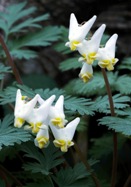
Dutchman’s breeches is a delightful little North American wildflower – and maybe something more.
In an article titled “Menominee Love Charms” posted at the website of Macalaster College’s Ordway Field Station near Minneapolis, Michaela Koller writes, “The main plant is Dicentra cucullaria, more commonly known as Dutchman’s breeches. The Menominee called this plant ‘a’nimau kapotise’sa’ which is translated into: ‘the one that looks like little pants, with his hands in his pockets’” – which is remarkably like the English name for it.
“The Menominee believed that Dutchman’s breeches could be used in two ways by a man to attain the love of his desire. The first way was … by throwing a piece of the plant at her. The second way … was by chewing a piece of this plant, so that the scent would be released…. In order to insure the girl smelled this plant, the man would circle around her, until she would ‘follow him wherever he goes.’”
Learn more here and order your own little charmers now for delivery this fall. (February 2020)
2 Experts, 3 Fall-Planted Treasures
If you don’t have an expert head gardener or landscape architect living next door to help you with your bulb-planting choices this fall, here are three recommendations we’ve gathered for you. (No need to thank us.)
Galanthus elwesii – Writing in the February 2019 issue of Gardens Illustrated, British head gardener Tom Brown calls Elwes snowdrop “a superb form of this winter favorite,” adding “I particularly enjoy growing this species, not only for the large, white flowers – which can often be twice the size of our much-loved common snowdrop – but also because of the opulent, glaucous foliage.” (The RHS is also a big fan, having given it the prestigious Award of Garden Merit.)
‘Thalia’ – In his list of “100 Most Beautiful and Useful Plants,” in that same issue of Gardens Illustrated, Swedish landscape architect Ulf Nordfjell includes this popular old daffodil. He describes it as “a late-flowering cultivar that produces many pure white flowers,” and says it “provides a delicate counterpoint to early shoots of perennials such as astilbes and epimediums.”
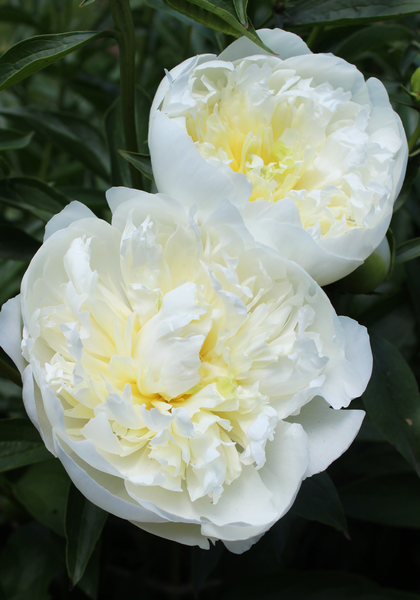
‘Duchesse de Nemours’ – This grand old peony is another of Nordfjell’s “100 Most Beautiful and Useful Plants.” It’s “an old-fashioned, scented, double, creamy-white flowering peony, and a real beauty,” he writes, and “my favorite, especially among carpets of violets.” (And even though it’s over 150 years old, the ‘Duchesse’ is an RHS Award of Garden Merit winner, too.) (August 2019)
‘Magnet’ Snowdrop: “Like the Blades of a Helicopter”
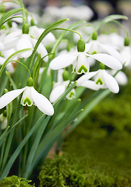
If you think all snowdrops are the same, think again. Here’s what our good customer Virginia Boyett of zone-7b Perryville, Arkansas, had to say the first year one of our favorites bloomed for her:
“The ‘Magnet’ snowdrops that I planted last fall have been in bloom for about three weeks, and they are the biggest snowdrops that I have ever seen.
“On cloudy days the buds stay closed and remind me of miniature tulips hanging upside down. Stark white, they are graceful and elegant.
“On sunny days, though, the outer whorl stands literally straight out, like the blades of a helicopter. With the extra-long pedicels, the entire bloom looks as if it could just take off and fly.
“The blooms keep coming, too. Each bulb has had 3-4 blooms apiece so far. I am loving it. I am just sorry I didn’t order more.”
Last offered in 2014, ‘Magnet’ is back in our catalog this fall, so Virginia – and you – can order it now! (August 2018)
Native Dutchman’s Breeches is Dicentra Expert’s Favorite
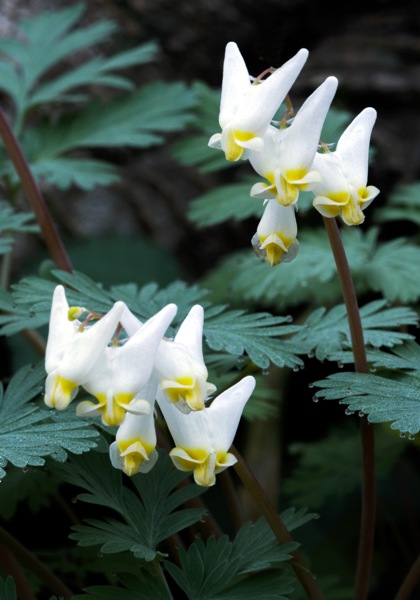
In his UK National Collection of Dicentra, Roger Brook grows 30-40 different kinds of bleeding hearts from all over the world. Although we offer just one – Dicentra cucullaria, Dutchman’s breeches – we were happy to read in the May 2018 issue of The English Garden that it’s Roger’s “current favorite.”
Dutchman’s breeches is “a diminutive, early flowering species from mountainous areas of northeastern United States and Canada,” writes author Val Bourne. “It has been grown in Britain since the early 18th century and was thought to have been sent by the Quaker botanist John Bartram (1699-1777) to Philip Miller at the Chelsea Physic Garden.”
“The exaggerated, heart-shaped flowers led the Menominee Indian tribe of Wisconsin to use this plant as a love charm,” Bourne adds. Another common name for it is “stagger weed, alluding to this plant’s toxic effect on livestock and presumably people” – which is good news for gardeners because it means that it’s deer-and squirrel-proof.
Although in his Yorkshire garden Brook says that “wet winters and slugs” make it “difficult to keep in the ground,” in colder gardens here in the US it’s usually easy to grow. In fact, I once dumped out what I thought was a pot of empty soil in a shady spot in my Ann Arbor garden and every spring since then a little colony of Dutchman’s breeches has been blooming and spreading happily there.
To see what a treat this native gem can be in your garden, order it now for fall delivery. (April 2018)
Favorite Bulbs of Top UK Garden Designers
Along with an excellent article about our friends at the Hortus Bulborum, the October issue of Gardens Illustrated (#226) includes an article featuring recommendations from UK garden celebrities titled “Designers’ Favorite Bulbs.”
Famed garden writer Mary Keen recommends fragrant ‘General de Wet’ tulip, “hard to find” Tulipa clusiana, and ‘Trevithian’ daffodil which is “scented and good for picking,” and “lasts longer than most in the garden.”
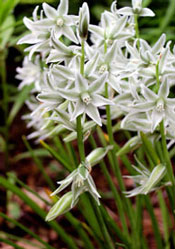
Rosemary Alexander of the English Gardening School recommends “showy, long-lived” winter aconite, “timeless and elegant” ‘Thalia’ daffodil, and – pictured here – silver bells (Ornithogalum nutans). “With silvery, gray-green, bluebell-like flowers,” she writes, “it is subtle and beloved by flower arrangers as it lasts well when picked. Best in well-drained, light shade. Great among ferns.”
And Tom Stuart-Smith, whose current projects include “restoring an Islamic garden in Marrakech,” recommends “subtle” ‘Vanguard’ crocus – “for sheer impact it is superb,” he says – and pricey ‘S. Arnott’ snowdrop. “I am not a collector,” he writes, “and for the most part I am completely happy with . . . humble Galanthus nivalis . . . but I have bought about 20 ‘S. Arnott’ every year for the past ten years and am beginning to think it’s really worth it. So much substance combined with grace.” (Sept. 2016)
2016 Great Plant Picks: They’re Not Just for Humans
Every year since 2001, Seattle’s Elisabeth C. Miller Botanical Garden has released an annual list of Great Plant Picks. Although especially well-suited to gardens in the Pacific Northwest, many of these plants are also outstanding choices for gardens across the country.
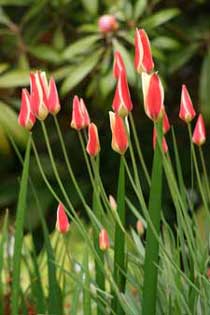
Butterflies, bees, and hummingbirds are the focus of this year’s GPP list, and Rick Peterson provides an excellent introduction to it in Pacific Horticulture. “As temperatures warm, bees emerge from their winter slumber looking for nourishment,” Peterson writes, and since “crocus are among the garden’s earliest blooming bulbs,” the GPP list includes several such as C. tommasinianus, ‘Jeanne d’Arc’, ‘King of the Striped’, and ‘Mammoth Yellow’. A few species tulips are also recommended, including T. clusiana and T. sylvestris which will have bees “bustling around the garden with satisfaction” and, in the right spot, will “reliably return year after year.”
Other Great Plant Picks that we’re offering now for delivery this fall include:
extra early-blooming winter aconite, traditional snowdrop, and giant snowdrop,
wildflowery Grecian windflower, ‘Gravetye Giant’ snowflake, and sowbread cyclamen,
unbeatable ‘Saint Keverne’, ‘Thalia’, and pheasant’s-eye daffodils,
and elegant martagon and regal lilies.
Learn more and see the entire list organized into categories such as “Fantastic Foliage,” “Made in the Shade,” and “Plants that Make Scents” at greatplantpicks.org/plantlists/search. (May 2016)
Blog-Goddess Reports “Virtually 100% Success” with Our Winter Aconites
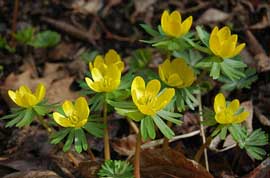
Always the first bulb to bloom here in our garden, winter aconites are thrilling, cheery, and carefree — so why aren’t more people growing them?
Although their tiny tubers can be hard to get established, our good friend Margaret Roach writes this week at her wildly popular A Way to Garden blog, “Good news: Buying waxed tubers from a vendor like Old House Gardens helps. I had virtually 100 percent success with their waxed tubers — a dramatic difference from any other time I’d tried to establish a new colony.”
Read more tips and see Margaret’s inspiring photos of these easy beauties in her garden at awaytogarden.com/hot-plants-winter-aconite/. (March 2016)
Newly Added: Gender-Bending “Indian Turnip”
In 1820 when it was listed in America’s very first bulb catalog, Indian turnip was the common name for the striking native plant that most of us today call jack-in-the-pulpit. Although its raw corms are poisonous, Native Americans learned to neutralize the poison by roasting or drying them for six months, after which they could be peeled and ground into a flour for making bread.
Jack-in-the-pulpit and Indian turnip are just two of this intriguing plant’s many names which include (so the internet says) Iroquois breadroot, starchwort, pepper turnip, bog onion, dragonroot, memory root, Indian cherries (for its red fruit), Indian cradle, brown dragon (to distinguish it from its native cousin, green dragon), petit precheur (in Quebec), aronskelk (in Dutch-settled areas), tuckahoe, cooter-wampee, wake robin (a name more often applied to trillium), Adam’s apple, devil’s ear, cobra lily, and — from its Old World cousin Arum maculatum — cuckoopint and lords-and-ladies.
And here’s another fascinating tidbit: jack-in-the-pulpit can change from male to female and back again. When they’re smaller, plants are generally male, but when environmental conditions are favorable and they grow large enough, they become female, producing seeds in a cluster of bright red berries. The year after fruiting or when conditions are challenging, plants often change back to male until they can build up the strength to set seed again.
This multi-talented native bulb is easy to grow in light shade, and you can order it now for fall planting. (July 2015)
See the Difference: English vs. Spanish Bluebells (and Counterfeits)
Spanish bluebells are great. Also known as squill in the South, they’re tough enough to bloom and naturalize just about anywhere. But if it’s English bluebells you’re looking for – the iconic wildflower of British woodlands – you’ll need to know how to tell them apart, because counterfeits are ubiquitous.
As head gardener Quentin Stark explains in the May 2015 issue of The English Garden, English bluebells are “a wonderful rich blue. The flowers are tubular and grow on just one side of the stem, and they have an amazing scent. Spanish bluebells are taller, with paler blue, more open flowers, have no scent, and the flowers grow all the way around the stem, making the plant more upright.” To see what he means, check out this excellent close-up photo.
Our true English bluebells are the real deal. They come to us from a small nursery in Wales where they’re native, and you can order yours now for fall planting at last fall’s prices. (April 2015)
Save on Hardy Byzantine Glads for Fall Planting
Unlike most years at this time, we’re NOT sold out of what may be the most exciting bulb we offer — the TRUE, fall-planted, perennial-in-zone-6-and-warmer Byzantine glad. The last of them are discounted 10% today ONLY, and as our good customer Tamara Bastone of zone-7b Chesapeake, Virginia, will tell you:
“Without a doubt your Byzantine glad is the real thing and worth every penny to boot! When it bloomed alongside of the other Byzantines I had for years (of course thinking they were the ‘real’ thing but wondering why they didn’t look like the ones in English gardens), well, I was in awe of its beauty. The color is a deep magenta and it’s taller and sturdier. Plus, it was a good investment because it has been multiplying for me for many years now. I’ve even shared some with friends. Trust me, you are the only ones offering the real thing. And I thank you!” (Nov. 2014)
Snowdrops at Warp Speed
“Well, here’s a cool thing,” our good customer Nancy McDonald emailed us last March. Nancy gardens in zone-5a Grand Marais, Michigan, a mile from Lake Superior, where the annual snowfall averages over 11 feet (yes, 11 feet!). “Three days ago my snowdrops were covered with more than a foot of snow. Two days ago the snow melted. Yesterday they had little green and white spears sticking up. Today the stems are long enough that the buds are starting to hang over. If it’s warm enough tomorrow, I bet some of them will open. That’s zero to sixty in only three days. Incredible!”
To speed your spring with snowdrops, order yours now! (Oct. 2014)
To Protect Your Lilies, Plant Alliums
Our good customer Amy Reynolds of Saint Louis, Missouri, emailed us this helpful tip:
“Your lily bulbs are fabulous! I popped them in the ground immediately. To protect them from an abundant local rodent population, I’ve planted them (as I always do with lilies) with several allium companions. I’ve found that squirrels and chipmunks won’t excavate past the alliums to get to nearby lily bulbs while they’re dormant, and the rabbits won’t go near allium foliage come spring.”
To try this yourself, why not order a few of our fabulous lilies and alliums right now? (Oct. 2014)
Learning from You: Pink Surprise Lilies Beyond Zones 6-7
Thanks to all of you who responded to our query about growing pink surprise lilies, Lycoris squamigera, outside of the narrow range we’d been recommending for them. You gave us lots of great feedback, and here’s the short version of what we learned.
ZONES — Many readers told us they’ve had long-term success with surprise lilies in zones 5b and 8a, and for the past couple of years we’ve been getting our bulbs from a third-generation bulb farm in 8a, so we’ve now expanded our zone recommendations to include zones 5b-8a(8bWC).
SOIL — Although well-drained soils are usually recommended for surprise lilies, several readers say theirs grow just fine in clay soil. Clay is dense, though, which makes it harder for bulbs to multiply, and it holds water longer which can cause bulbs to rot.
WATER — Many readers say they never water their surprise lilies, and that may be a good thing. Like most bulbs, they do best when they’re relatively dry during their summer dormancy. Since many of us water our gardens then, this could be one reason they’re often found surviving in lawns and “neglected” areas that get less watering — though of course they do need water when they’re not dormant, from fall through the end of spring.
SUN/SHADE — Full sun seems to suit them best, especially the further north they’re planted. But many of our readers said they do well in partial shade, too, especially if it’s from deciduous trees which leaf out later.
PLANTING DEPTH — Some authorities say to plant them with the neck just under the soil surface, but our expert North Carolina grower recommends planting them so they’re covered with 2-4 inches of soil. Since the bulbs we ship are 3-4 inches tall, that means planting them with the base 5-8 inches deep.
LONG WAIT FOR BLOOM — If you dig them from a neighbor’s yard you probably won’t have this problem, but if you plant dry, dormant bulbs you’ll have to be patient. Although most will put up leaves their first spring, sometimes nothing emerges until the spring after that, and they virtually never bloom until their second or even third year.
Thanks again to everyone who helped us “crowd-source” this article! For the longer version, including quotes from customers growing them everywhere from zone-3 Saskatchewan to zone-9 Florida, see our More About Surprise Lilies page. (late Sept. 2014)
Six Heirlooms among “18 Stunning and Off-Beat Bulbs”
I’d been waiting for the fall issue of the reborn Garden Design magazine ever since one of my favorite writers, Jenny Andrews, interviewed me this past summer for an article about less-familiar but amazing bulbs. When it arrived last week I was happy to see that six of her “18 Stunning and Offbeat Bulbs” are heirlooms we offer: hardy Byzantine gladiolus (which Jenny says “has kept its graceful, wild look, in contrast to its frou-frou cousins”), Tulipa clusiana (a “perennial tulip” that “requires fewer chilling hours to bloom” than most), red spider lily (with “its sparklers of coral-red . . . in the golden glow of early autumn”, Formosa lily (which, alas, we can’t supply this fall due to crop failure), and two of our spring-planted glads: ‘Boone’ (“a treasured plant I’ve carried with me as I’ve moved”) and ‘Atom’ (“a small glad with giant impact”). To see them all, subscribe at gardendesign.com. (late Sept. 2014)
Teach Us, Please: Where (and How) Do Pink Surprise Lilies Grow Best?
I was surprised to see a couple of pink surprise lilies (Lycoris squamigera) blooming here in Ann Arbor recently, and they reminded me that we wanted to ask your advice on growing them. Although we recommend them for just zones 6a-7b(8bWC), some authorities recommend them all the way from zone 5a through 9b, so . . .
1. If you garden in zone 6a or colder: Is pink surprise lily winter-hardy for you, and do you have any tips — sunlight, soil, planting depth, watering, winter protection, etc. — for getting it to multiply and bloom happily?
2. If you garden in zone 8a and warmer : Is pink surprise lily thriving for you, and do you have any tips — sunlight, soil, planting depth, watering, winter protection, etc. — for getting it to multiply and bloom happily?
One zone-5b garden where we know they’re flourishing is the spectacular Better Homes and Gardens Test Garden in downtown Des Moines. Garden manager Sandra Gerdes sent us a photo of them blooming there last year and wrote, “I love the surprise lilies, and they always generate a lot of comments from visitors, which is why I’m ordering more to add to our patch. You can also see clusters of them blooming in the older, established neighborhoods of Des Moines when you drive around in August. It is ‘surprising’ that we have success with them here in zone 5b, while you say they can be a challenge in 6a. We definitely experience the extremes of winter and summer here on the prairie! As the saying goes, ‘Plants can’t read those catalog restrictions.’” (Aug. 2014)
Heirloom Alliums: “Top 12” and Tough Enough for an “Impressionist Meadow”
In the summer issue of Garden Design, Ohio nurseryman and designer Nick McCullough recommends a dozen plants he knows he “can rely on — not just to survive, but to actually star in the midsummer garden.” For the complete list you’ll have to pick up a copy of the magazine (see below), but a few of McCullough’s stars are Veronicastrum ‘Fascination’, Rudbeckia maxima, ‘Cafè au Lait’ dahlia, and the heirloom allium known as German garlic. “This compact perennial,” McCullough writes, “sports a profusion of globe-shaped lavender flower heads perched on slender stems. Unfazed by intense heat, it adds a welcome splash of color to the front of the summer border. . . . Bees, butterflies, and hummingbirds adore the blossoms. And as with all Allium, this plant has a faint onion scent, so it’s deer resistant.”
Garden Design plugs another of our heirloom alliums — purple-headed garlic or drumstick allium — in “An Impressionist Meadow,” an article showcasing a flower-filled meadow garden by Long Island’s Landcraft Environments. The colorful garden combines ornamental grasses with “strong-willed” perennials such as ‘Walker’s Low’ catmint, Gaura ‘Siskiyou Pink’, ‘Terra Cotta’ achillea, and drumstick allium. “Alliums extend the spring fling of bulbs,” writes author Tovah Martin, “and even after most alliums have come and gone, the drumstick allium begins its suspended display of tall 2-to-3-foot stems that are crowned with a topknot of garnet flowers. But what makes this element exquisitely invaluable for a meadow garden application is the drumstick allium’s ability to pop up from beneath the skirts of any plant . . . for a flash of color while the neighbors are revving up. The fact that grass roots slurp up any available moisture in the soil does not faze this allium in the least.”
We’re big fans of these dependable, “exquisitely invaluable” alliums, too — and now is the time to order them for fall planting. (July 2014)
Stone Bouquet: 17th-Century Tulips, Roman Hyacinths, and Crown Imperial
A friend sent us a notecard recently with a striking image of tulips, Roman hyacinths, and crown imperial, all worked out in semi-precious stones. Dating to the second half of the 1600s, the artwork is an example of pietra dura, an expensive, mosaic-like inlay made with thin slabs of stones such as jasper, malachite, and lapis lazuli. Now in the collection of Nelahozeves Castle in the Czech Republic, the artwork shows flowers that were new and expensive at the time — and so little changed since then that they are instantly recognizable today — including a crown imperial, sparsely-flowered Roman hyacinths, and a tulip that looks a lot like ‘Lac van Rijn’. See it here. (late Oct. 2013)
Bulb of the Month: Emily Dickinson’s Dog-tooth Violet
Gardeners love to share the joy we find in gardening. We pick tomatoes with our kids, we give plants away, we post photos on Facebook, and we join garden clubs. For those of us who grow heirloom plants there’s the added pleasure of sharing with gardeners beyond the bounds of time — such as Emily Dickinson, who I was happy to discover was a fellow fan of one of my favorite wildflowers, dog-tooth violet or trout lily, which she knew as adder’s tongue. In Emily Dickinson’s Gardens, our good customer Marta McDowell writes:
“While Emily reveled in her solitary walks and canine companions, she also explored with her friends. ‘There were several pleasure parties of which I was a member, and in our rambles we found many and many beautiful children of spring . . . — the trailing arbutus, adder’s tongue, yellow violets, liver-leaf, blood-root, and many other smaller flowers.’
“One spring, with a gift of adder’s tongue, Emily enclosed this poem, noting their dappled leaves.
Their dappled importunity
Disparage or dismiss —
The Obloquies of Etiquette
Are obsolete to Bliss —
“Emily’s poems . . . are often opportunities for the dictionary. ‘Importunity’ means unseasonable, and May is early for lilies. . . . ‘Obloquies’ are slanders, abuses. She implies that bliss beats bad manners. Perhaps Emily’s floral acknowledgment was belated, or maybe there was a hidden meaning known only to the recipient.”
For me, the poem’s most important meaning is clear: 150 years ago one of America’s greatest poets shared my “bliss” in a simple little wildflower that blooms in my backyard every spring. (To share the bliss, order yours now for fall planting. And don’t miss the other American wildflowers new this year, Dutchman’s breeches and trillium.) (Aug. 2013)
“Chilly Lilies” Announce the Coming of Fall
A couple of years ago someone asked us if we carried “chilly lilies.” Since we’d never even heard of them, we googled the name and discovered this interesting little article posted by Julie at the humanflowerproject.com:
“The chilly lilies are up in Central Texas. Morton King of Georgetown gave this nickname to the old-fashioned oxblood lily (Rhodophiala bifida) after noticing that their blooms coincided with the first cold spell at summer’s end. ‘They’ve become famous,’ says King, 91, ‘because they come up a week or two before the first cold front in the fall. They are alleged to be an accurate predictor of when things are going to cool off and you’re going to have a fall rain.’ Each year when they bloom, King writes to the Georgetown Sun, telling the community that autumn is, blessedly, on the way. A PhD sociologist, King is careful about causality: ‘Now, it’s the coming cold weather that makes them come up, I suspect, rather than vice versa,’ he laughs.” (Aug. 2013)
Fine Gardening Spotlights Our True Byzantine Glads
One of our favorite garden magazines, Fine Gardening, just published an article they invited Scott to write about our true Byzantine glads. It’s in the August issue, on newstands NOW, or you can read it here. In celebration, we’ve reduced prices on these graceful, hardy, heirloom glads by 5% — for a limited time only. We’re betting we’ll sell out of them earlier than ever this year, so you might want to order yours now! (June 2013)
“Upside-Down Plaid Tulips” for Paula’s Husband’s Stocking
Can you keep a secret? When she ordered this past fall, Paula Kocher of zone-6b Malvern, Pennsylvania, asked about putting bulbs in her husband’s Christmas stocking. We told her that, although that might work for tulips, daffodils, hyacinths, and lilies, it would be risky for the small, tunic-less bulbs she wanted to give him. But it HAD to be those bulbs, she replied, so . . . .
“I’m going to make a little card with the photo from your catalog for his stocking, and while hubby wasn’t here, I snuck out and planted them at the edge of the driveway leading to his garage (where he spends A LOT of time building his ‘57 truck) and covered them with just enough leaves so he didn’t notice the disturbance. He had these at his first home and it took me a long time to figure out what he meant by an ‘upside-down plaid tulip.’ Santa is SO lucky we help him out every year.”
Can you figure out what Paula planted for her husband? See it here — and Merry Christmas to all of Santa’s helpers! (Dec. 2012)
Mary Rediscovers Her Great-Aunt’s Spider Lilies
Sometimes the best thing about an heirloom plant isn’t its beauty or vigor or fragrance but the memories it evokes, as Mary Mattison of Sandy Springs, Georgia, reminded us recently: “My great aunt in Charleston, South Carolina, had a small garden in her backyard on Queen Street where she had lived since the 1870s. In the borders was a mass of spider lilies that held my attention as a young girl. Over the years I have inquired at numerous nurseries in Atlanta about spider lilies, only to be given a quizzical look. I thought perhaps my memory wasn’t serving me well as to the name, until I read an article in Southern Living this fall which led me to your website. Thank you!” (Oct. 2012)
Flower Power: Bulbs to Cure Breast Cancer and AIDS
Every gardener knows the healing power of Nature’s beauty and getting your hands in the dirt, and of course plants have been used medicinally since the dawn of time. In his always interesting Plant Delights newsletter, Tony Avent recently shared some good news about the medical potential of some of our favorite bulbs and other flowers:
“Recent research from The University of Sichuan, published in Current Chemical Biology (vol. 3, 2009), has shown that the common snowdrop, Galanthus nivalis, has great potential as an anti-fungal, anti-viral (including HIV), and anti-tumor agent for several cancers, including breast cancer. The report also studied the significant anti-tumor activities of other related monocots,” including daffodils, mistletoe, Solomon’s seal, mondo grass, cast-iron plant, and dwarf voodoo lily. Other common flowers “with very specific anti-HIV activity,” Tony adds, include amaryllis (Hippeastrum), Cymbidium orchids, and red spider lilies. (Oct. 2012)
Staff Pick: Donna’s “Tall, Strong, Lovely” Snowflakes
Gardener extraordinaire Donna Squires has been helping us ship bulbs for a decade now, and her big front-yard garden is filled with our beauties. When I asked her which fall-planted bulb she liked best, her answer surprised both of us:
“Of all the gorgeous, fragrant, brilliant, and outstandingly stunning bulbs you offer, I can’t believe I am declaring my favorite (for now) is ‘Gravetye Giant’ snowflake. I’m not sure if I can even articulate why. I have a soft spot for white and simplicity; which certainly is the ‘Gravetye’, but it is also tall, strong, hardy, lovely, and early. I admire that in anyone or thing!”
Donna says her love of the much shorter and more common snowdrop (Galanthus nivalis) led her to plant her first snowflakes five or six years ago. “I grow them in my shade yard in a bed of myrtle,” she added, where the groundcover’s dark green leaves make “the white blooms really pop.” (Sept. 2012)
Theophrastus, Baking Bread, and Byzantine Glads
Our true, fall-planted Byzantine glads are graceful, brilliant, and winter hardy to zone 6 — but did you ever try baking bread with them? That’s exactly what the ancient Greek scientist Theophrastus recommended 2400 years ago. Theophrastus, who lived from about 371-287 BCE, was a student and successor of Aristotle and the author of the ancient world’s most important botanical works. “All bulbous plants are tenacious of life,” he wrote in his Enquiry into Plants along with tis suprising recommendation: “The root of the plant called corn flag [a common name for G. byzantinus] is sweet and if cooked and pounded up and mixed with flour makes the bread sweet and wholesome. It is round and without ‘bark’ and has small offsets like the long onion. . . . Corn flag, which is called by some xiphos, sword, has a sword-like leaf whence its name.” So now you have another good reason to plant this treasure this fall! (late August 2012)
How Do Red Spider Lilies Know It’s Fall?
“It’s the first great mystery of fall,” our long-time friend Bill Finch of the Mobile Press-Register wrote back in 2009, “and even after watching it happen for nearly 50 years, I can’t get over it: The naked flowers of the lycoris, the red spider lilies, emerging from the weeds of summer. Doesn’t it worry you in the way it worries me? How do they know, with such absolute certainty year after year, that it’s the first of September, and the great wheel of the seasons is slowly but inexorably turning toward fall?
“We both can imagine what drives the daffodils and azaleas to bloom in the spring — the lengthening days, the rapid warming of the ground under our feet. But what is the signal for lycoris in September, when the ground still blisters your bare feet as it did in July, and the reservoir of summer warmth only makes the longer nights hotter longer? The lycoris sense something in the change of season that I don’t have the sense to quantify, a change I’m never willing to believe, until I see the naked flower stems shoot up, reminding me that all my plans for fall are weeks behind.” (late August 2012)
Bulb of the Month: Drought-Tolerant, Animal-Resistant, and Bee Friendly
When our good customer Naomi Price called recently to order 100 German garlic, we asked her why so many? She told us she and her husband Larry have 40 acres outside Prineville, Oregon, and they’re looking for “drought-tolerant plants that deer don’t like, woodchucks don’t like, and bees DO like.” The 25 German garlic they planted in fall 2009 have “come through with flying colors,” so Naomi came back for 100 more to plant their expanding garden. Oh happy bees! (August 2012)
Byzantines True and False — In 1790 and Today
The puny impostor sold elsewhere as Byzantine glad — at impossibly cheap prices — has been troubling gardeners for centuries, as witnessed by Curtis’s Botanical Magazine in 1790:
“Gladiolus communis, Common Corn Flag: Grows wild in the corn [i.e. grain] fields . . . , varies with white and flesh-coloured blossoms, increases so fast . . . as to become troublesome . . . ; hence, having been supplanted by the Greater Corn-Flag, the Byzantinus . . . , whose blossoms are larger, and more shewy, it is not so generally found in gardens as formerly.” (2011-12 catalog)
Easy to Love, Hard to Spell
One of our most popular bulbs is the hardy and amazing Bissentine glad . . . er, Bynzyntine glad . . . no, wait a minute — how do you spell that?? If you’re not sure, you’re not alone. Gardeners searching for Byzantine glads at our website have misspelled it and its Latin name byzantinus 23 different ways. But don’t worry, we’re here to help! Whether you spell it Bisantine, Bisentine, Bissentine, Bizantine, Bynzyntine, Bysantine, bysantinus, Byzanine, byzanticus, Byzantile, byzantinas, byzantinis, byzantinius, Byzantinne, byzantinum, byzantium, Byzatine, byzatinus, Byzentine, Byzintine, byzintinus, Byzntine, or Bzatinne, you’ll find true stock of exactly what you want at oldhousegardens.com. (June 2012)
The High Line: Heirloom Bulbs Flourish in New York’s Coolest Park
The Martha Stewart Show wasn’t the only exciting thing I did in New York last week. I also visited the High Line, a cool new park built on an abandoned railway high over the streets of Manhattan. The railway was originally used to deliver meat, produce, and raw materials to warehouses and factories along the west side of lower Manhattan. Abandoned in the 1980s, it was slated for demolition until neighborhood activists, inspired by the way nature was reclaiming the railbed, convinced the city to recycle it into an aerial greenway. Since opening in 2009, the park has become wildly popular and sparked billions of dollars worth of re-development in the area.
As you might imagine, an elevated railbed in Manhattan isn’t the easiest place for plants to grow, but the High Line is richly planted with tough perennials, grasses, woody plants, and bulbs, many of which are natives or heirlooms. All are mulched with coarse, crushed bluestone that recalls the site’s original surfacing, and some are doing better in these challenging conditions than others. Grape hyacinths had naturalized themselves there long before work on the park began, and the day I visited I was happy to see the tiny, dark blue Turkish glory-of-the-snow spreading happily. See all of the High Line’s bulbs here — including the ten tough heirlooms we offer for delivery this fall, still at LAST fall’s prices. (March 2012)
Elwes Snowdrop: Sydney and Scott Say Try It (and Save 25%!)
In a lifetime of gardening, Sydney Eddison has grown thousands of plants and evaluated them all with the eye of an artist. If you haven’t tried the wonderful Elwes snowdrop yet, this description from Eddison’s first book, A Patchwork Garden, might help you see why you should: “[My friend] gave me clumps of giant, early-blooming snowdrops (Galanthus elwesii) with flowers three times the size of the common snowdrop (G. nivalis). The buds are like tiny perfect snow-white eggs. And when they open, the three large outer segments spread apart, revealing a little underskirt patterned with a green hourglass.” (Oct. 2011)
Prince Charles Plants Byzantine Glads at Home
True, zone-6 hardy Byzantine glads have gained another fan — His Royal Highness Prince Charles! In the March 2011 English Garden magazine (on newsstands now), Claire Masset reports on the Prince’s innovative, all-organic gardens at Highgrove, his family estate.
“Last autumn, at the Prince’s request,” she writes, his gardeners planted “masses of Gladiolus communis subsp. byzantinus bulbs on either side of the Hornbeam Avenue next to the Wildflower Meadow. In May and June, they will create a spectacle of magenta flowers that will complement dreamy displays of camassias and Allium hollandicum ‘Purple Sensation’. It’s no wonder the Prince tries to spend as much time as possible at Highgrove during these months.”
Masset adds that “increasingly, the focus [at Highgrove] has been on a much more sustainable approach to bulbs.” As head gardener Debs Goodenough explains, “Out of the 40,000 bulbs we planted last year, 95% are an investment in the garden. The crocuses and daffodils will carry on year after year.” (Feb. 2011)
Rare Snowdrop Sells for $567
The British rage for snowdrops hit new heights last week when a single bulb of the rare Galanthus plicatus ‘E.A. Bowles’ sold on Ebay for $567. The variety was discovered in 2002 at Myddelton House, the former home of legendary bulb connoisseur, E.A. Bowles (whom you’ll find quoted throughout our catalog). With an $800,000 grant from the Heritage Lottery Fund, Bowles’ gardens are currently being restored to their early-20th century splendor. Learn more at the blog of our friend, snowdrop expert John Grimshaw. (As for the sale’s effect on our prices, you have nothing to fear!) (Feb. 2011)
Southern Living’s “10 Best Plants for Fall Planting”
“Order from oldhousegardens.com” — that’s what Southern Living’s senior garden writer Steve Bender recommends for all three bulbs on his recent “10 Best Plants for Fall” list. He calls Spanish bluebell “the best spring bulb no one seems to know about. It stands 15-20 inches tall, loves our climate, and spreads steadily into glorious sweeps. It comes in white and pink, but blue ‘Excelsior’ [the form we sell] is my favorite.” Steve also praises red spider lily and surprise lily. Both “send up foliage in the fall which remains through spring and then disappears. In August and September, spikes of flowers standing anywhere from 18-30 inches tall appear seemingly overnight without leaves. Both are easy to grow, spread into drifts, and last for generations.” (Sept. 2010)
Better Together: An Easy Combo for Your Spring Garden
The wine-red, newly-sprouting foliage of peonies is always a treat, but our friend Tom Fischer’s Perennial Companions: 100 Dazzling Plant Combinations will show you how to make it look even better. As he writes, “The emerging foliage of peonies can be as spectacular as the flowers. . . . Planted among the vivid blue of glory-of-the-snow, it practically glows.” [Unfortunately, the inspiring, full-page photo of this combination is no longer available online but trust us, it looks amazing!] (Feb. 2010)
Are Red Spider Lilies Hardy in Wisconsin???
Maybe. Although we recommend them for zones 7 and warmer only, Jean Virnig of Fort Atkinson, Wisconsin, has been experimenting with them. She writes:
“I ordered your heirloom version of the red spider lily (L. radiata radiata) because this form is triploid and rare in the trade, having been replaced by the diploid form (L. radiata pumila). Jim Shields of Shields Gardens wrote in his online journal that the triploid form is hardy for him in zone-5 Indianapolis while the diploid form perishes. He added, ‘Why are the triploids hardy in the cold North when their diploid cousins are not? It might be because they have extra amounts of a few critical genes that promote cold hardiness. For some genes, having three copies allows the cell to produce more of the gene-product than having only the usual two copies does.’
“Here in my zone-5a Wisconsin garden, I have been growing the heirloom form for two years now, and although they have proved hardy enough to survive the winters with no special care, they may not be truly suited for this climate.
“Red spider lilies put up leaves in the fall which have to survive until spring. Last winter we had lows of -20 F, three weeks when the temperature never once rose above freezing, and destructive, desiccating winds. Nevertheless, every one of my bulbs still had green leaves this spring, albeit shorter, as they were burned back by the cold. On the bulbs I planted last fall, most leaves were 4”-6” long, as they were not able to grow much longer before the weather turned inhospitable. Those that were already established, planted the year previous, grew much longer foliage that lay down on the ground after the first snow and survived the winter nearly fully intact. Currently in late June all of the foliage is still green with no signs of dying back, although I suspect it will soon.
“In areas that have more consistent snow cover, or in a sheltered location like a woods, damage to the leaves over the winter would probably be mitigated. As for me, I will try covering them with straw this winter and removing it in the spring. I am still hopeful of some red spider lily blossoms in my yard in the future.” (June 2009)
American-Grown Surprise Lilies: Reserve Yours for Fall Now!
Almost every week at the popular Dave’s Garden website, more people search for our Lycoris squamigera than anything else we sell. So here’s an inside tip for our newsletter readers: This fall, instead of our usual Dutch-grown bulbs, we’ll be delivering bigger, fatter, American-grown bulbs of this lavender-pink, late-summer beauty. Maybe even better, if you order now, you’ll get them at last fall’s prices. But, shhhh, don’t tell everyone. Our supplies are limited! (Feb. 2009)
Another Southern Voter for ‘Gravetye Giant’ Snowflakes
Our long-time customer Peter Schaar of Dallas writes:
“I’ll second Richard Devine’s praise of Leucojum aestivum ‘Gravetye Giant’ for hot, stressful climates. Mine that I got from you have been my most reliable and productive spring bulbs, reliably blooming in late February regardless of the weather. Hooray for GG!” (Oct. 2008)
Do Animals Eat Your Bulbs? Try These!
For a quick list of bulbs that animals rarely eat, click the “Animal Resistant” box at our easy Advanced Bulb Search.
Daffodils and snowflakes (Leucojum) are usually completely animal-proof, and other bulbs that most animals won’t touch include alliums, Camassia, glory-of-the-snow (Chionodoxa), Colchicum, Crocus tommasinianus, winter aconite (Eranthis), crown imperials, snowdrops (Galanthus), hyacinths, Spanish bluebells (Hyacinthoides), Ipheion, grape hyacinths (Muscari), silver bells (Ornithogalum nutans), and Scilla siberica.
Tulips and lilies, unfortunately, are a favorite on most animal menus. For tips on keeping them safe, see “Protecting from Animals” in our online Planting and Care. (Oct. 2008)
North or South, Fall is for Planting Byzantine Glads
More and more gardeners across the country are singing the praises of our true, hardy Byzantine gladiolus.
In Long Island’s Newsday, for example, Irene Virag wrote “I’m adding more Byzantine gladiolus from . . . Scott Kunst, the Indiana Jones of the bulb world. Scott saves heirloom bulbs on the verge of extinction and propagates them. Some go back as far as the 15th century. Byzantine gladiolus — a 2- to 3-foot-tall perennial with deep magenta flowers that look like orchids — was spectacular in my garden last spring.”
And a thousand miles away, Ruth Geraci of Summerdale, Alabama, wrote: “My Byzantine glads are so beautiful. The first year’s glads multiplied, adding to the new ones I planted last fall. Everyone admires them! Thanks for having such beautiful and unusual plants for my hot southern Alabama climate.” (Sept. 2008)
Head Gardener Praises ‘Gravetye Giant’ (and Gophers Shun It)
Writing in Fine Gardening magazine, estate gardener Richard Devine of Dunnellon, Florida, recommends one of our favorite bulbs for zones 5-9S/9W:
“I know few plants that offer as much and ask for as little as ‘Gravetye Giant’ snowflake (Leucojum aestivum ‘Gravetye Giant’). This marvelous 24-inch-tall bulb is one of the first plants to emerge, with nodding white bells as early as mid-January. Nearly 20 years ago, I scattered ‘Gravetye Giant’ along paths and in perennial beds here, and the plants have unfailingly risen every year since.”
If that’s not enough to convince you to try it, our friend Gregg Lowery of California’s Heritage Roses tells us that Leucojum are the most gopher-resistant bulbs of all, out-ranking even daffodils! (Jul. 2008)
Intensely Blue: Our New Turkish Glory-of-the-Snow
New to our catalog this year is the TURKISH glory-of-the-snow, not to be confused with the common luciliae/forbesii/siehei forms. Expert Judy Glattstein praises it in her fine Bulbs for Garden Habitats:
“Chionodoxa sardensis . . . has an intensity of blue that must be seen to be believed, its concentration unadulterated by any white. . . . Four to twelve flowers per stem provide an abundant display from even a handful of bulbs. In a lightly shaded site at the edge of the woods I planted a goodly numbered, 50 or more, with 10 Narcissus ‘Rip van Winkle’. The dwarf daffodil, a cheerfully tousled, ragged mophead of a double, like an exaggerated dandelion, makes a charming contrast to the blue puddle beneath them. The two kinds of bulbs have been coming back year after year, so I think it is a happy marriage.” (June 2008)
She’s Awed by Our TRUE Byzantine Glads
Our fall-planted Bulb of the Year is NOT your ordinary glad. For a start, it’s perennial through zone 6, and we have true stock! Our good customer Tamara Bastone of Chesapeake, Virginia, writes:
“Yes, without a doubt your Byzantine glad is the real thing and worth every penny to boot! I ordered one last fall and when it bloomed alongside of the other Byzantines I had grown for years (of course thinking they were the ‘real’ thing but wondering why they didn’t look like the ones in English gardens), I was in awe of its beauty. The color is a deep magenta and it is taller and sturdier. Plus, it’s a good investment for it will multiply over the years. Trust me, you are the only ones offering the ‘real’ thing. Thank you!” (Sept. 2006)
Mobile’s Favorite Gardener Lauds Our Freesia and More
Bill Finch, Mobile’s garden guru and environmental editor of the Press-Register, reported recently that he has had excellent results with our antique Freesia alba (which we usually recommend for dry-summer/Mediterranean-climate gardens only), Byzantine gladiolus, Spanish bluebells, true Tulipa clusiana, and the Narcissus he calls our “Gulf Coast All-Stars:” ‘Grand Primo’, ‘Campernelle’, ‘Carlton’, ‘Sweetness’, ‘Avalanche’, ‘St. Keverne’, and ‘Thalia’. (Aug. 2006)
Schoolhouse Lilies and Surviving Katrina
Our good customer Nancye Renihan of Fairhope, AL, writes:
“I dug clumps of red spider lilies from my mother’s yard in Bay St. Louis, some of which had come from her mother’s yard. Whenever they pop up in my yard now, I think of the first day of school. We used to pick them for our teachers. Mom’s house was washed away by Katrina, but her spider lilies bloomed amid the rubble.” (2006-07 catalog)
Martha’s May Bouquet: Spanish Bluebells and Chives
We’ve grown these two cast-iron classics for decades, but we never thought of combining them in bouquets till we saw how great they look in the May 2006 issue of Martha Stewart Living. As Martha says, they’re “unexpected but perfect partners: They coordinate in color and reach full bloom at the same time, in May.”
Our favorite bouquet was in a style we’ve seen in books of the mid-1800s that’s much like Victorian carpet-bedding. In a small round vase, a circle of chive blossoms makes a neat, frothy border around a center of densely packed Spanish bluebells. For added texture, tuck in a few fuzzy leaves of lamb’s-ear. By all means, do try this at home! (April 2006)
Garden Design’s “Way Hot 100” Includes Three of Our Bulbs
Every year in March, Garden Design magazine names their “Way Hot 100.” These are, editor Jenny Andrews says, “insiders’ top picks . . . , what designers and avid gardeners are wild about this spring.” Many are brand new, but of the eleven bulbs listed we’re proud that three are heirlooms we offer:
Formosa lily: “This heirloom bulb is back in vogue,” and Jenny praises its rich fragrance.
Red spider lily, Lycoris radiata: Its “sea-urchin-like flowers” are showcased in a full-page photo. (Please note that we recommend it for zones 7-10 only).
Tulipa clusiana: “One of the few tulips that will perennialize (especially in the South), thriving in dry soils.” (We offer the hard-to-find, original, red-and-white T. clusiana.) (March 2006)
Felder Reports: Hurricane Lilies Light Up Katrina-Browned Mississippi
Our friend Felder Rushing (www.felderrushing.net) emailed us recently:
“The hurricane lilies (aka red spider lilies, Lycoris radiata) were outstanding in September and into October, in many cases the ONLY color in the landscapes. The Gulf Coast of Mississippi was eerily brown. The sustained winds, salt spray, and 20-foot surge wave that went over two miles inland in some places turned EVERYTHING a uniform sepia, like an old post card, including live oaks and pines to ligustrum, azaleas, hollies, ivy and everything else evergreen (even the aspidistra, liriope, and ivy). But because of the wind-induced hormone stress, all the spring flowering trees (Asian magnolias, flowering pears, etc.) were in full bloom. And then there were all the red lycoris popping up through the debris.” (Dec. 2005)
We Say Byzantine Glads, They Say Whistling Jacks
Our friend Greg Grant sent us this tidbit by the illustrious Roy Lancaster from a BBC website:
“I recommend a wild species, the Gladiolus byzantinus, which is very common in the Isles of Scilly where they call it Whistling Jacks. It’s perennial and the flowers are quite outstanding with a rich purplish-rose color.” (Oct. 2005)
Our Fall-Planted, True Byzantine Glads Flourish in Ireland, Too
Our Texas friend Cynthia Mueller emailed us in June saying:
“I’m happy to report that our old friend, Gladiolus byzantinus, is alive and well in southern Ireland. A few weeks ago I saw them blooming proudly in Helen Dillon’s Dublin garden, Glasnevin Botanical Garden, Powerscourt, Muckross Castle, at Mount Juliet estate, and here and there along the way in cottage gardens. . . . The winters there are fairly warm but the summers are never as hot as here in Texas where they thrive. The glads were growing happily with Oriental poppies, columbine, tradescantia, knautia, bronze fennel, bearded iris, true geraniums, Russell lupines, foxgloves, and so on.” (Sept. 2005)
We Shop the Competition: 25-Cent Byzantine Glads Unmasked
Are our Byzantine glads really worth what we charge, when some of our competitors offer them for less than a quarter? One of our resident Master Gardeners had to see for herself. She writes: “Last fall, one of our more gullible, adventurous, and fiscally responsible staff members finally succumbed to the siren song of the ‘Cheap Byzantine Glad.’ She ordered 25 corms for $5.75 from one of our best-known competitors, planted them as instructed, and waited hopefully. What emerged from the soil this spring was surprising, even shocking.” To read more and see exactly what she means, take a look at our Byzantine glad comparison photo page. (June 2005)
Are Wild English Bluebells Doomed?
Spring would hardly be spring in England without woods full of wild English bluebells, Hyacinthoides non-scripta. But these dreamy scenes may soon be a thing of the past according to a distressing article in the Daily Telegraph. The culprit is the alien Spanish bluebell, Hyacinthoides hispanica. Pollen from garden-grown Spanish bluebells is being carried by bees to wild English bluebells, and the resulting hybrid offspring are crowding out the natives. This same interbreeding has long been happening in the bulb fields of Holland, making it all but impossible to get pure English bluebells there. That’s why we get our guaranteed-true English bluebells from a small farm in the wilds of Wales! (Sept. 2003)
True Byzantines Take Jim Back to the Fifties
Our good customer Jim Massey of Moncure, NC, writes:
“Your Gladiolus byzantinus were spectacular this spring — just like being in my grandmother’s garden in Mart, Texas, in the 1950s. I had bought this plant a dozen times from as many sources searching for the true old variety. They are worth the price and more!” (2003-04 catalog)
Enjoying Spring’s First Snowdrops Inside
Our good customer Cynthia Van Hazinga of Hillsborough, NH, offered a great tip for enjoying snowdrops inside: “I can’t tell you how much I love snowdrops, always the first blossoms of spring in early April. Of course I can’t bear to pick them but sometimes I dig up a clump and put them in the middle of the dinner table (in a tray) to worship. Then I put the clump out again in a different place so the naturalizing can go on and on.” (March 2003)
The Thrill of Something New
If snowdrops bloomed for months, would we love them more? Here’s a thoughtful response from one of my favorite garden writers in Henry Mitchell on Gardening:
“In the garden, at least, you soon grow almost sick of flowers that bloom endlessly . . . . Floribunda roses can become boring after a while; so can marigolds. They are nice enough, it’s just that after a few months you wish they would look a little different. It is otherwise when the snowdrops bloom. Wow. Look at that. Right through the snow. Nobody ever gets bored with snowdrops or crocuses.” (1999-2000 catalog)



